
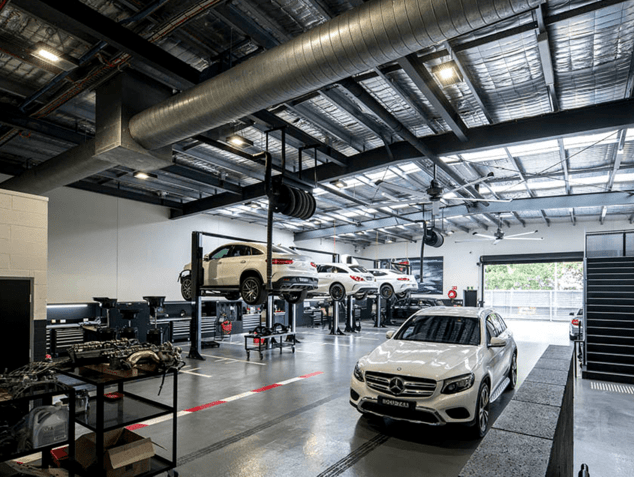
Mechanical workshops are workplaces where certain minimum ventilation values specified in Annex III of BOE-A-1997-8669 must be met. Considering mechanical workshops as closed premises where light work is carried out, it is specified that:
- The temperature of the premises must be between 14 and 25 ºC.
- The relative humidity will be between 30 and 70 percent.
- Workers should not be frequently or continuously exposed to air currents whose velocity exceeds 0.75 m/s in hot environments.
- Without prejudice to the provisions in relation to the ventilation of certain premises in Royal Decree 1618/1980, of July 4, which approves the Regulation of heating, air conditioning and sanitary hot water, the minimum renewal of the air in the workshops It will be 50 cubic meters of clean air per hour and worker in order to avoid a stale environment and unpleasant odors.
How to achieve a temperature below 25ºC in summer in a mechanical workshop?
The first thing we must check is that the ceiling or walls of the mechanical workshop do not produce radiation inside. If it produces radiation, our thermal insulation is applied to the exterior as if it were a paint without hindering the workshop workers or adding weight to the roof and prevents such radiation in the workshop.
Companies like Ford have already verified that 20ºC is reduced with its application.
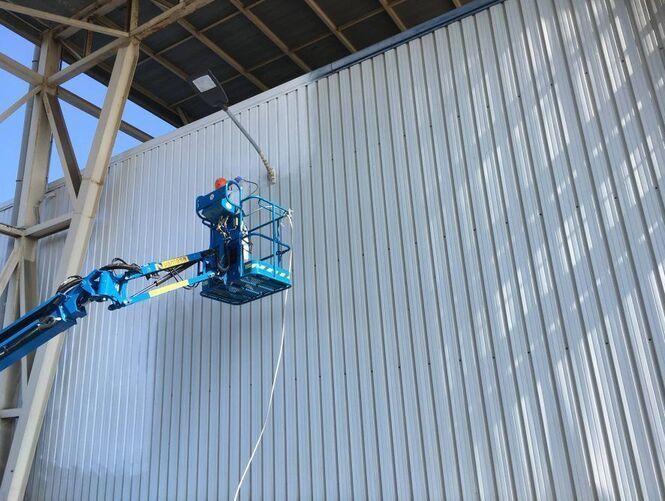
The insulation in many cases will not have a temperature in the mechanical workshop below 25ºC and we will have to add air conditioning systems.
The first thing that occurs to us is to resort to air conditioning equipment, but what if I have other options with lower consumption?
The fans do not need to cool the entire volume of air in the workshop for workers to have a wind chill of less than 25ºC.
The following graph corresponds to the HSE (Health and Safety Executive) effective temperature diagram:

According to this diagram, if the temperature of the workshop is 27ºC and the air inside it moves at 0.75m/s, the thermal sensation is approximately 24.5ºC, 0.5ºC below the maximum allowed.
In order to ensure that the indoor air in the workshop has sufficient movement, the appropriate fan must be found for each case.
If it is intended to ventilate the entire surface of the workshop equally, we opt for ceiling fans with these recommendations:
From 2.5 to 5 meters high, Magnovent uses fans with maximum 100W motors with very low consumption ranging from 3 to 89W.
From a height of 6.5 meters, to guarantee that the air can be distributed over the floor, Magnovent always uses fans with motors with a power equal to or greater than 1000W. We have fans for workshops that consume 1500W and cover almost 3360m².
To choose the diameter of the Magnovent fan, it is governed by the physical barriers that may be in the ceiling or by the installation height. We recommend that if the ceiling height is less than 7.5 meters, the fan should not exceed 5.5 meters in diameter.
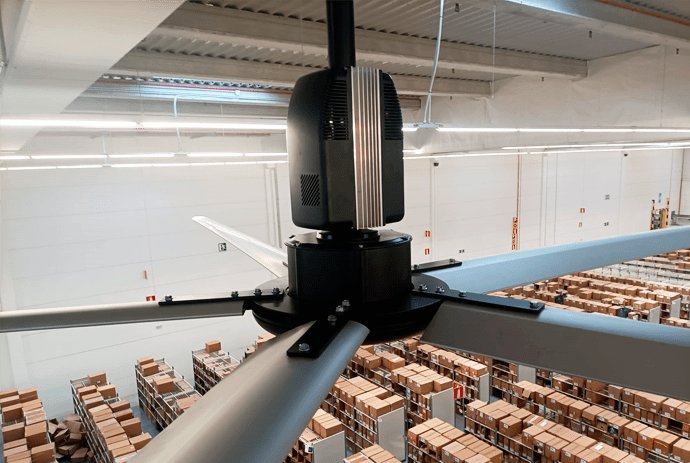
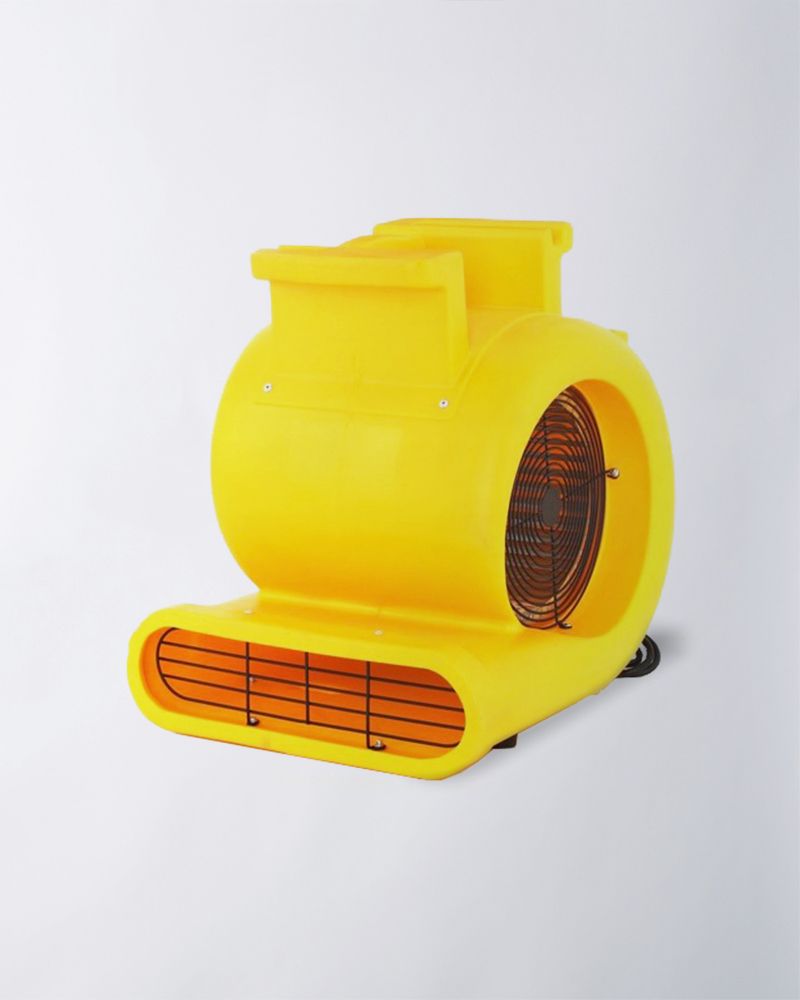
If you want to ventilate or even strengthen some specific areas, we opt for the following floor, ceiling or wall fans:
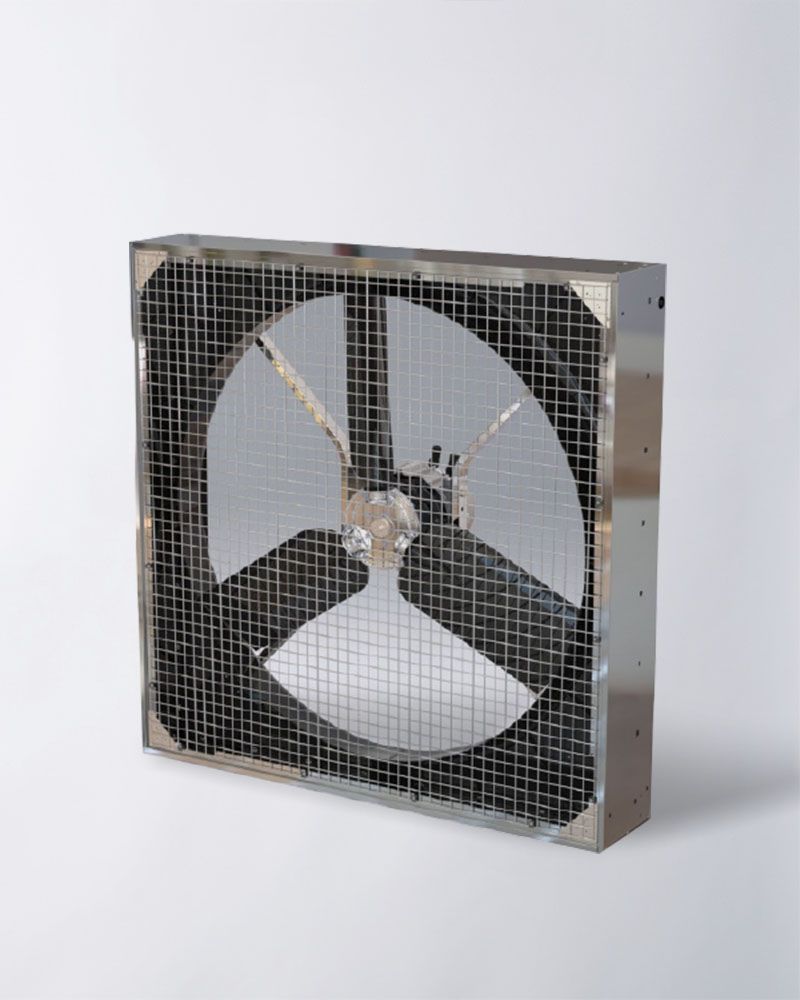
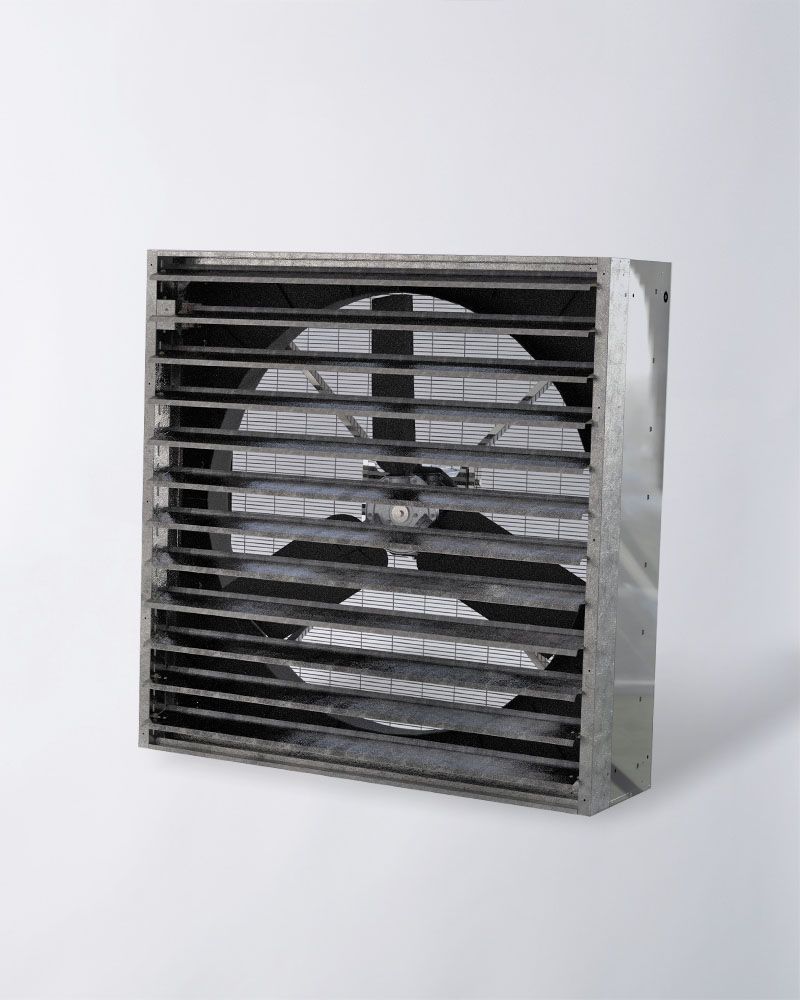
If it is intended create a draft in rectangular workshops we can use the fan Anemoi AIRWALL with a flow rate of up to 62,220 m3/h that will also act as an extractor:
How to achieve a relative humidity between 30 and 70% in a mechanical workshop?
Magnovent has faced work environments with relative humidity of 100% and has always opted for the same solution to reduce these values: air renewal.
To achieve large air renewals, we either place an extraction fan, or we place the ceiling fans.
These two elements will expel air from the interior and bring in new air if we leave an opening in the workshop that can be a door, window, grill or vent.
How to generate air currents whose speed does not exceed 0.75 m/s in a mechanical workshop?
All the fans exposed in this guide have a regulation from 0 to 100% so the workshop worker can set it to their liking. The Magnovent ceiling fans run at low rpm to create a constant breeze in the shop.
The workshop ventilation project must always be studied so that the speed of air propagation through the floor is between 0.8 and 0.3 m/s.
How to guarantee a minimum renewal of 50 m3 per hour and worker in a mechanical workshop?
Doing a quick calculation if we have 10 workers in the mechanical workshop, we will need to renew 500m3/h.
If we open a standard door of 2.04m x 0.63m we will have an opening of 1.29m².
(500 / 1,29) / 3600 = 0,1m/s
Having sized the workshop ventilation project with ceiling fans at a minimum indoor air velocity of 0.3m/swe would be renewing three times what is necessary.
Having used the wall extractor Anemoi AIRWALL with a flow rate of up to 62,220 m3/hwe will extract 124 times more air than that established by standard.
