
Energy Efficiency for Buildings
Improve energy efficiency and optimize your facility’s performance
Reduce energy consumption without sacrificing thermal comfort
Improving energy efficiency for buildings makes it possible to reduce energy consumption while maintaining suitable indoor conditions for people, products, and processes. In addition, it helps make better use of available resources, reduce energy costs, and minimize the environmental impact of facilities.
At Magnovent, we analyze the thermal behaviour of each facility to identify the building’s weak points. The key is to detect where energy is being wasted and propose the best solutions tailored to its characteristics. We combine ventilation, thermal insulation, heating, and control systems to improve the energy performance of industrial warehouses, storage facilities, shopping centres, and other large-scale buildings.

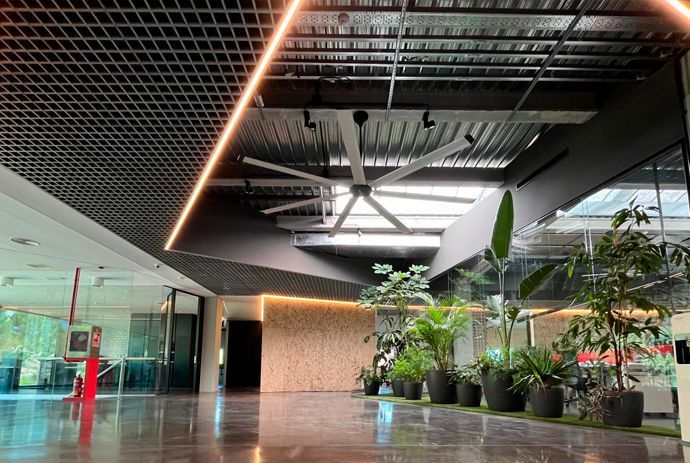
What does improving a building’s energy efficiency mean?
Energy efficiency for buildings consists of achieving the necessary temperature, ventilation, and comfort conditions while using the least amount of energy possible. The key to bioclimatic architecture lies in making better use of already generated energy and reducing the building’s thermal losses.
Some of the factors that directly influence energy consumption are:
- Building height.
- Orientation.
- Insulation.
- Activity taking place around and inside the building.
- Occupancy level.
- Existing HVAC systems.
Analysing these factors makes it possible to identify which actions can generate real improvements. An energy-efficient building distributes air more effectively, limits heat gains and losses, adapts climate control to actual needs and prevents equipment from operating longer than necessary. This contributes to maintaining more stable indoor conditions, improving thermal comfort and the building’s overall energy performance.
Benefits of improving energy efficiency in buildings
La aplicación de soluciones adaptadas al comportamiento térmico de cada instalación permite reducir consumos innecesarios y mejorar las condiciones interiores.

Lower energy consumption
Optimising ventilation, insulation, and heating systems helps reduce the energy required to maintain suitable indoor conditions consistently.

Reduced costs bills
More efficient climate control can reduce the costs associated with the daily operation of large buildings and industrial facilities considerably.

More thermal comfort
A more uniform distribution of air helps reduce the occurrence of excessively cold or hot areas throughout the entire building space.

Less pollution impact
Reducing energy consumption helps decrease emissions directly associated with the operation and climate control of the building overall significantly.

Longer service life of facilities
Limiting the intensive and unnecessary operation of certain equipment can help minimise wear and tear and maintenance requirements over time.
6 keys to improving a building’s energy efficiency
Achieving a more efficient building requires acting on the elements that generate the highest energy consumption. Improving insulation, distributing air correctly, and optimising the operation of existing systems can help reduce consumption and maintain more comfortable indoor conditions.
For this reason, at Magnovent we present 6 key ways to improve your building’s energy efficiency:
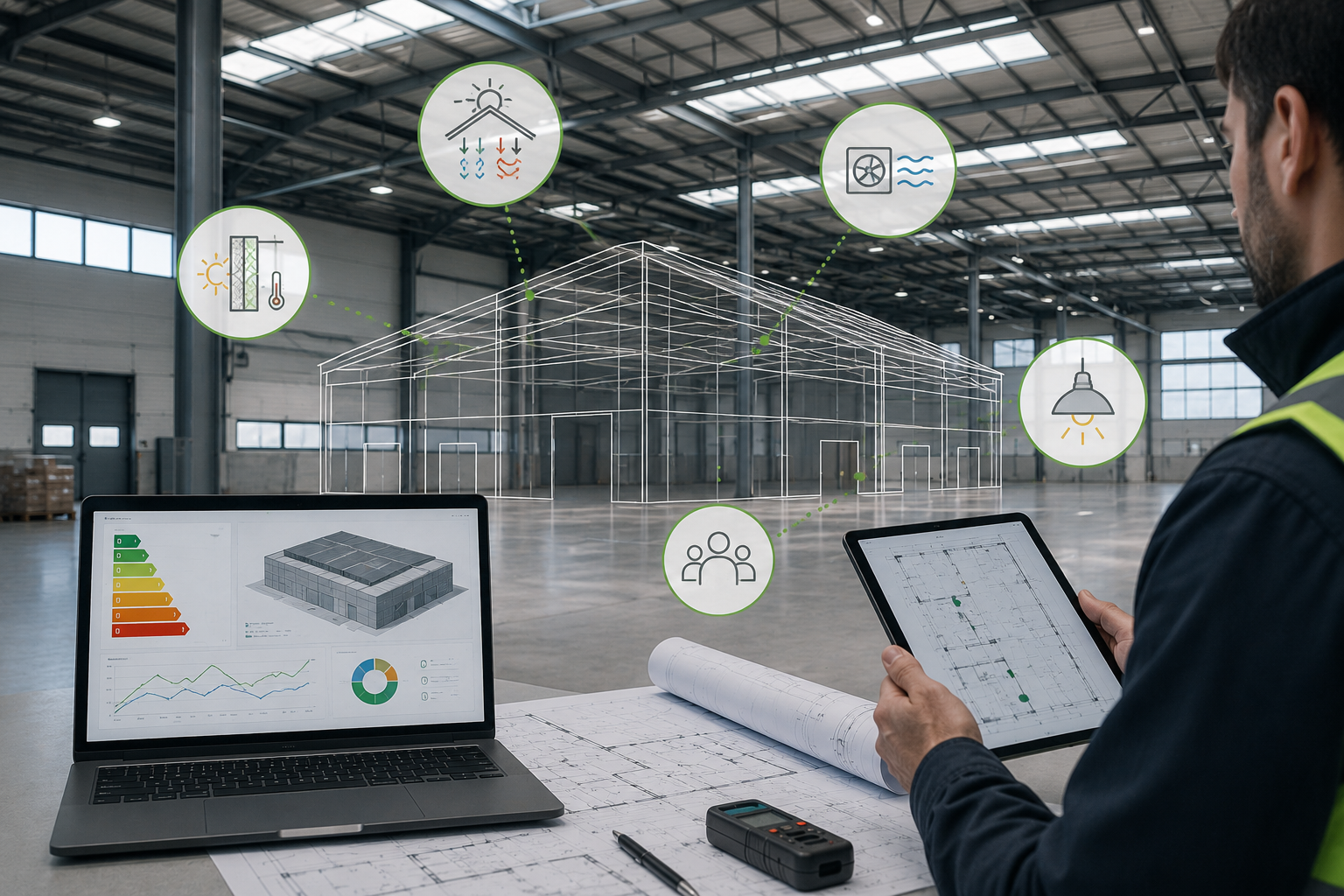
1. Analyse the building’s energy performance
Before implementing any solution, it is essential to understand how the building uses and loses energy. Analysing the floor area, height, orientation, insulation, activities carried out, and HVAC systems makes it possible to identify the main areas for improvement and understand the facility’s actual needs.
Having a technical analysis helps prioritise actions with the greatest impact and avoids implementing solutions that do not meet the building’s needs. In addition, it makes it possible to establish a more efficient strategy and evaluate which systems can complement each other to achieve better results.

2. Reduce thermal losses in the building
Roofs, façades and other exposed surfaces can contribute to significant heat gains during summer and heat losses during winter. This constant exchange with the outside environment can make it difficult to maintain a stable temperature and increase climate control requirements.
Improving thermal insulation helps limit these exchanges, maintain more stable indoor conditions and reduce the workload on HVAC systems. Acting on the most exposed surfaces can improve the building’s thermal performance throughout the year.
3. Prevent hot air stratification
In industrial facilities and buildings with high ceilings, hot air tends to rise and accumulate in upper areas. This phenomenon, known as thermal stratification, causes temperature differences between the floor and ceiling and may result in heating systems operating longer than necessary.
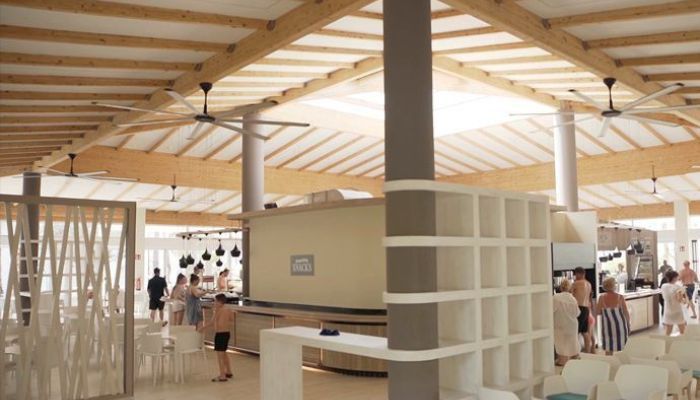
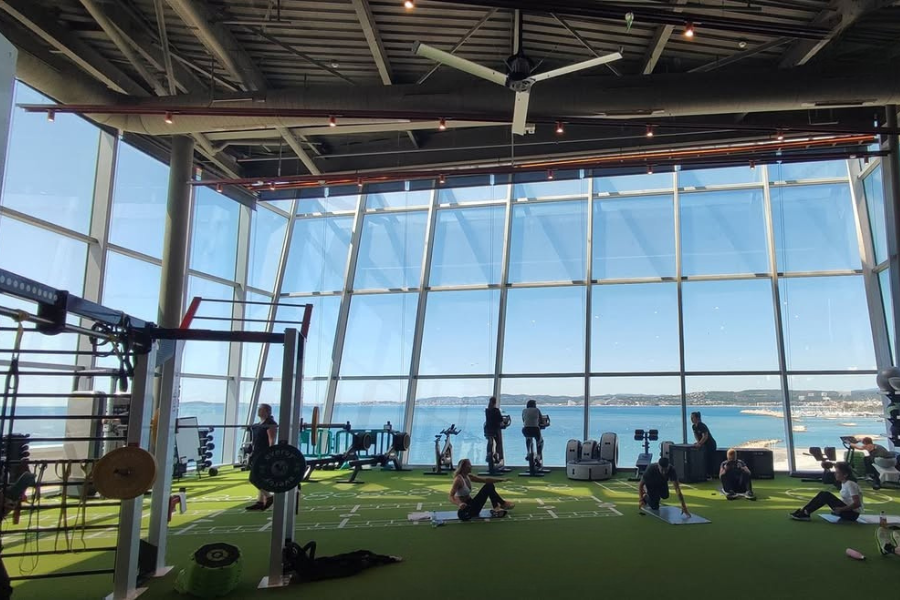
HVLS industrial fans make it possible to move large volumes of air and promote air redistribution. During winter, destratification helps return accumulated heat to occupied areas, achieving more uniform temperatures and making better use of the energy dedicated to heating.
4. Adapt climate control to actually occupied areas
Not all areas of a building require the same thermal conditions or for the same length of time. Heating or air conditioning entire spaces when only certain areas are occupied can generate unnecessary energy consumption, especially in large industrial facilities.
Systems such as radiant heating make it possible to provide heat directly to the areas where it is actually needed. This strategy is particularly interesting for warehouses, workshops, and spaces with localized occupancy, as it allows heating to be adapted to the activity carried out in each area.
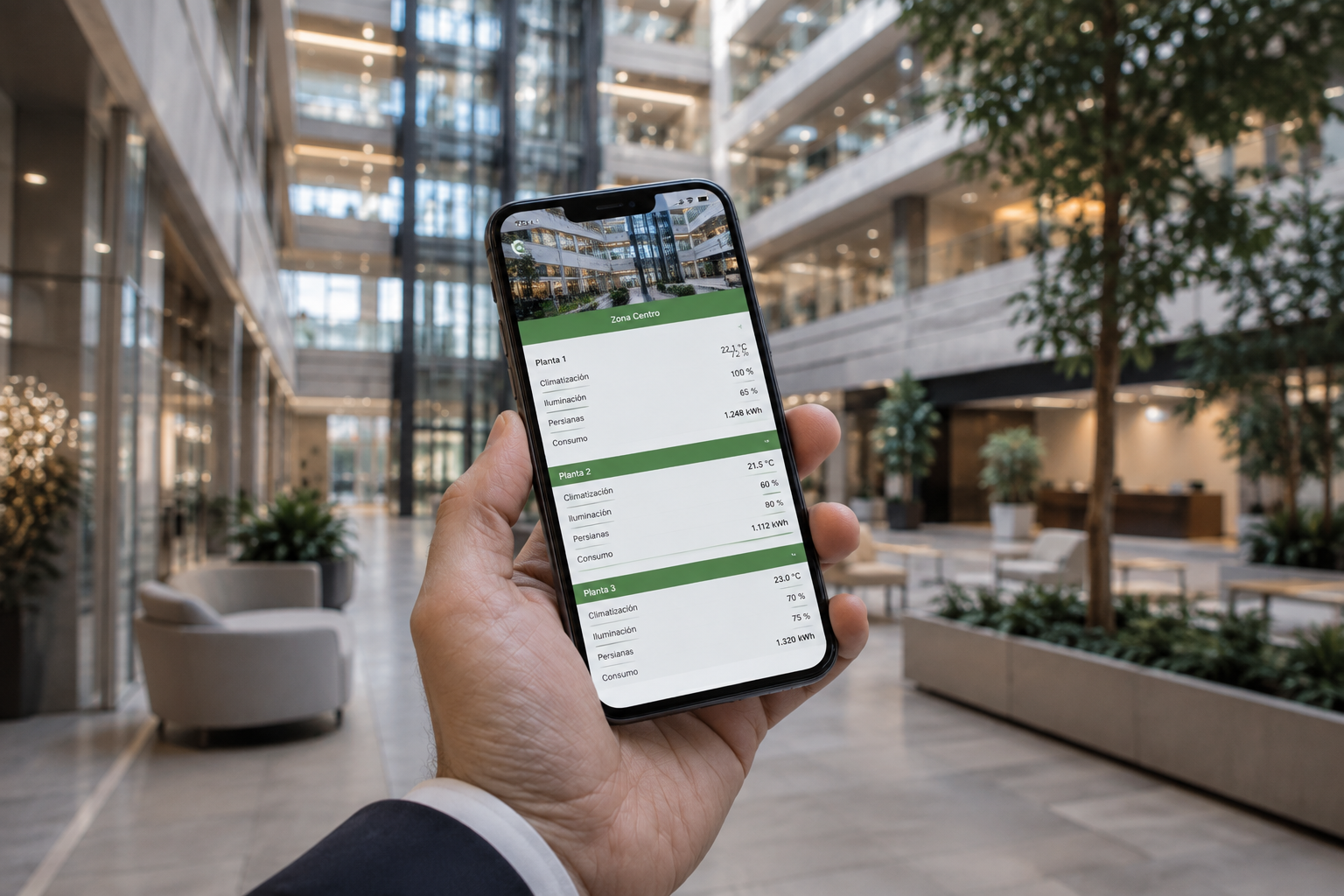
5. Automate system operation
Outdoor temperature, schedules, occupancy and the building’s thermal requirements change throughout the day. Keeping equipment operating under the same parameters at all times can lead to unnecessary consumption and make efficient facility management more difficult.
Smart control systems make it possible to regulate ventilation and heating according to the actual conditions of each space. Automating their operation helps adapt consumption to each moment, optimize equipment performance, and maintain more stable indoor conditions.
6. Take advantage of available natural resources
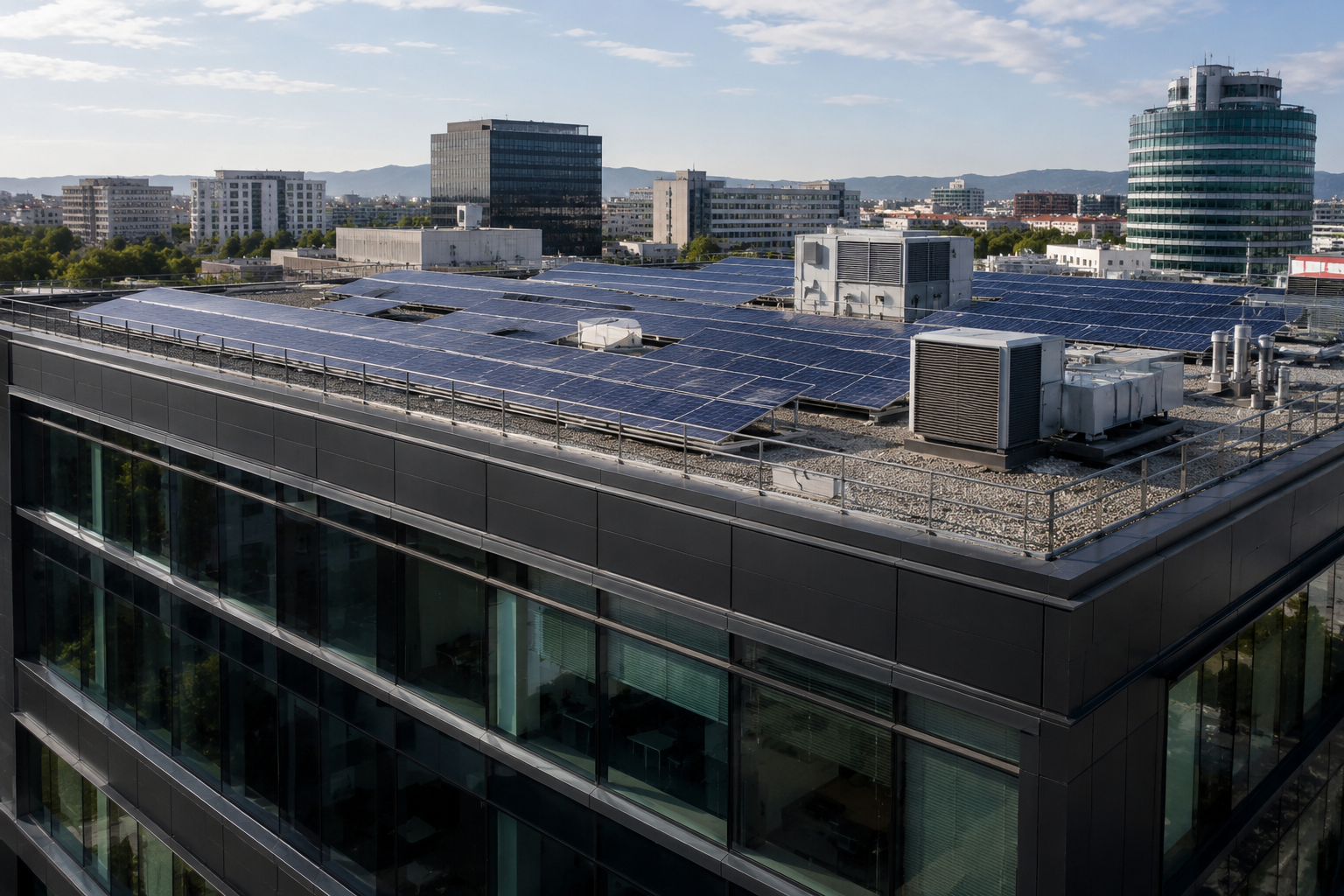
Improving energy efficiency for buildings also involves making use of available natural resources and reducing dependence on conventional energy sources whenever the characteristics of the facility allow it. Orientation, solar radiation, and climatic conditions can become resources for improving energy performance.
Solar heating makes it possible to use the sun’s energy to introduce warm air into the building during colder months. Combined with other bioclimatic solutions, it can reduce the demand for conventional heating and contribute to creating more efficient and sustainable facilities.
By making these changes, you can improve your building’s energy efficiency and start saving money on your energy bills today.
Why choose Magnovent to improve your building’s energy efficiency?
Improving energy efficiency for buildings requires analysing each facility individually. At Magnovent, we combine technical expertise and different bioclimatic solutions to design proposals tailored to each project.
- Specialised technical advice: We analyse the building’s thermal and energy performance before recommending any system.
- Solutions adapted to each facility: We design proposals taking into account the surface area, height, activity, climate, insulation, and existing systems.
- Experience in large spaces: We work with industrial warehouses, storage facilities, shopping centres, sports facilities, and other large-scale buildings.
- Integration with existing systems: Our solutions can complement installed climate control systems to improve thermal distribution and optimise their performance.
- Control and regulation: Equipment can be integrated with control systems that adapt operation to the building’s actual conditions.
- Support throughout the entire project: We advise you from the initial analysis through to the selection, implementation, and commissioning of the solution.
Reduce energy costs all year round with Magnovent
Achieving lasting improvements in building performance requires a long-term approach focused on measurable results. The advantatges can be reflected in lower operating expenses and more efficient resource management throughout the year.
The impact can be measured through tangible savings across every seasons of the year:
45%
energy savings in winter
25%
energy saving in summer
30%
annual cost savings

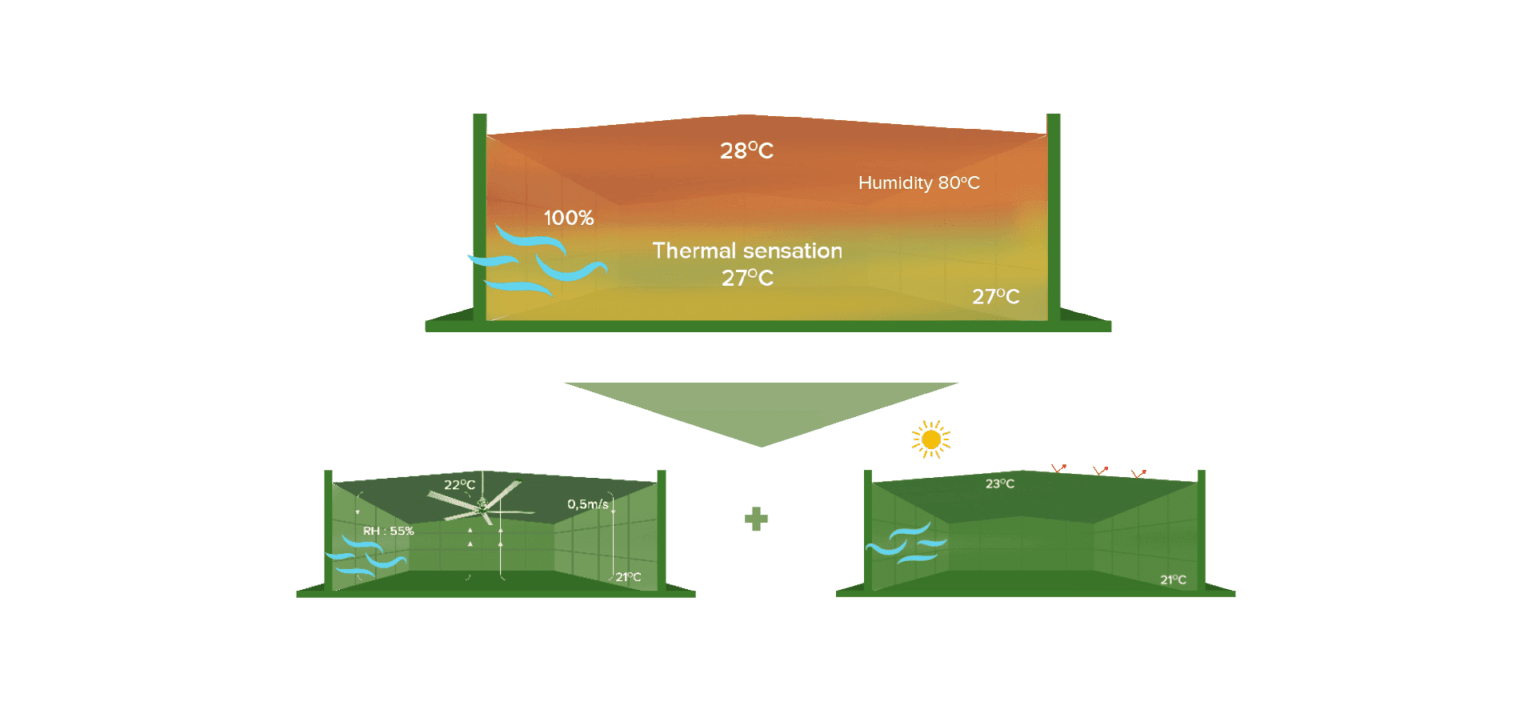
NO EFFICIENT SYSTEM
The main problem that appears while climating industrial warehouses or buildings with high ceilings is that the air-conditioning does not attend the desired effect even if it is set at maximum power and cold escapes through the opened doors.
EFFICIENT SYSTEM
As the HVLS fans create a breeze effect in the building occupants, the preset temperature of the air-conditioning system can be increased, reducing its consumption. Adding our ceramic paint, 95% of the UV rays are reflected and the ceilings overheating is avoided.
Magnovent solutions to improve energy efficiency for buildings
At Magnovent, we combine different technologies to design energy efficiency for buildings solutions adapted to each facility. Not all buildings require the same systems, nor should they be applied in the same way.
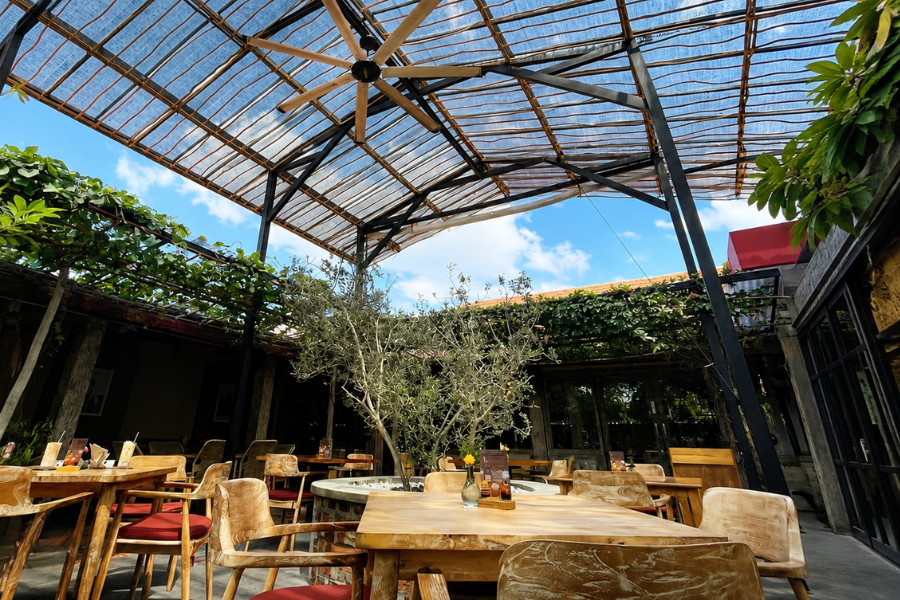
HVLS industrial fans are the ideal solution for improving energy efficiency in buildings, especially those with high ceilings. Thanks to the large volume of air moved by these fans, they help equalize ambient temperatures, significantly reducing the energy consumption of other traditional climate control systems.
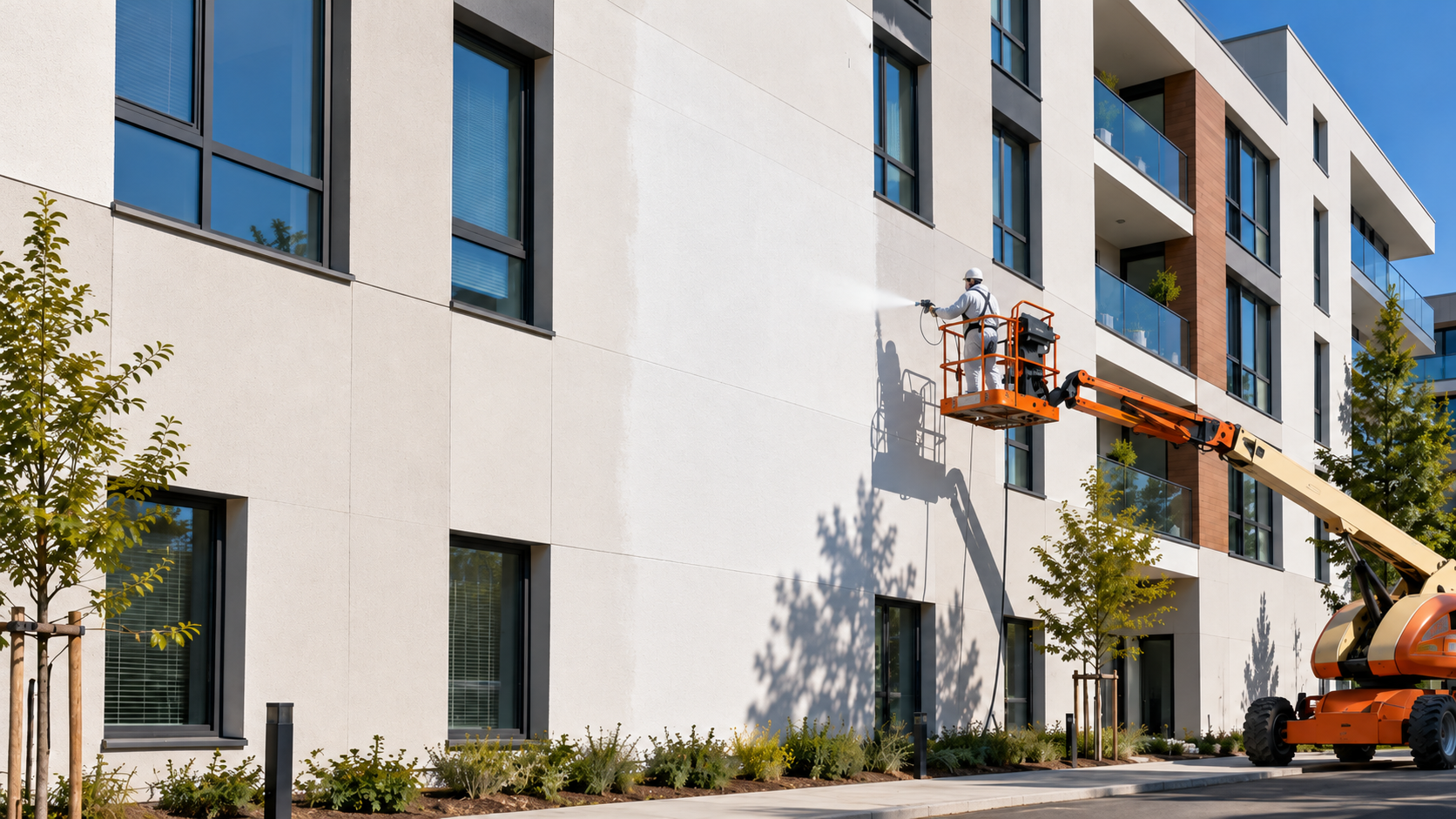
Magnovent’s thermal insulation prevents excessive heat from entering during summer by reflecting 95% of UV rays, thereby reducing the impact of solar radiation on the building. During winter, it retains heat, improving the efficiency of heating systems, helping to reduce thermal losses and maintain more stable indoor conditions.
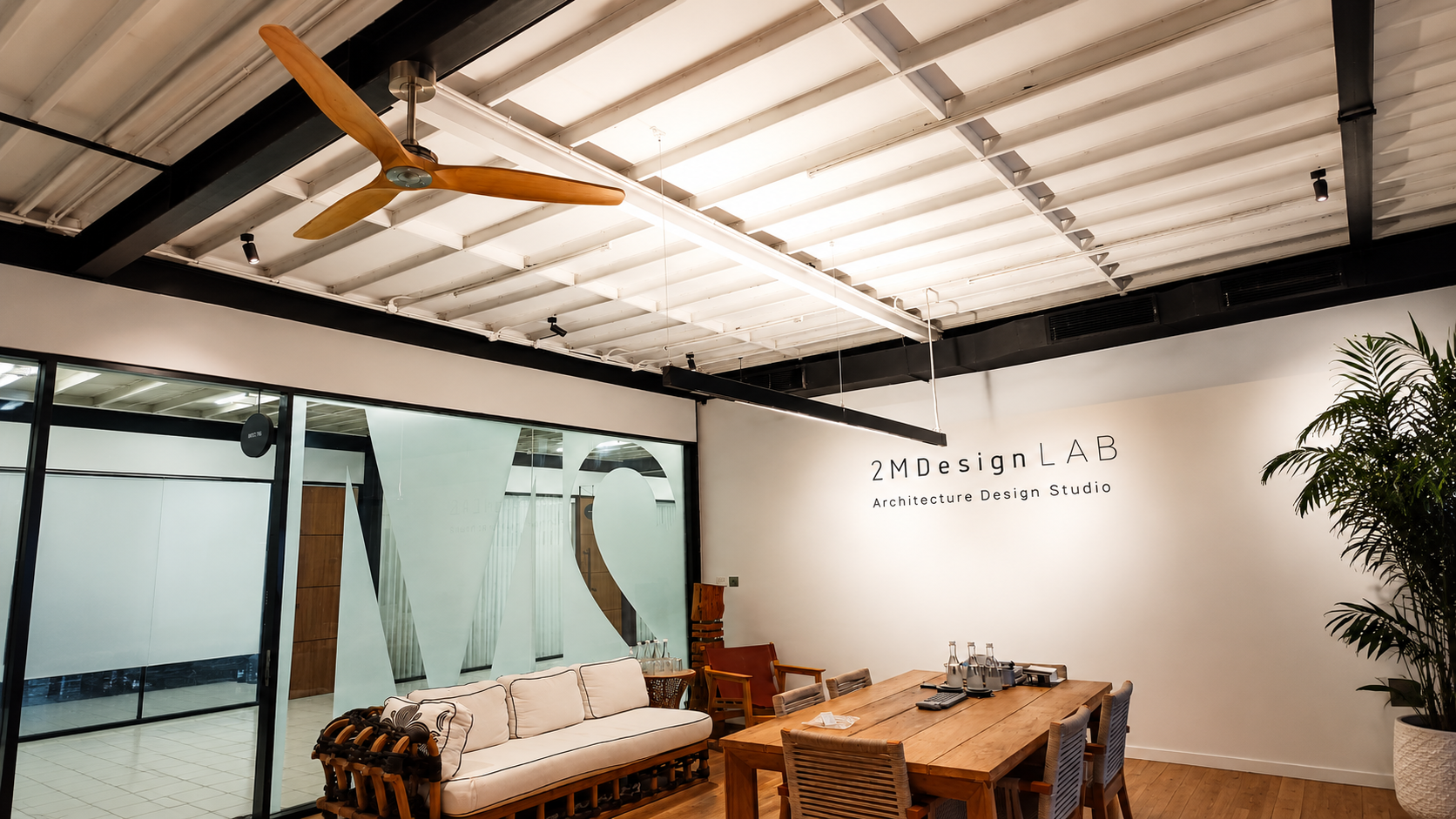
Radiant heating provides direct heat to the areas where it is needed without having to heat the entire volume of air within the building. Gas-fired radiant heating systems are suitable for efficiently heating large surfaces. In contrast, electric radiant heating makes it possible to provide localized, flexible, precise, and efficient heating in specific areas.
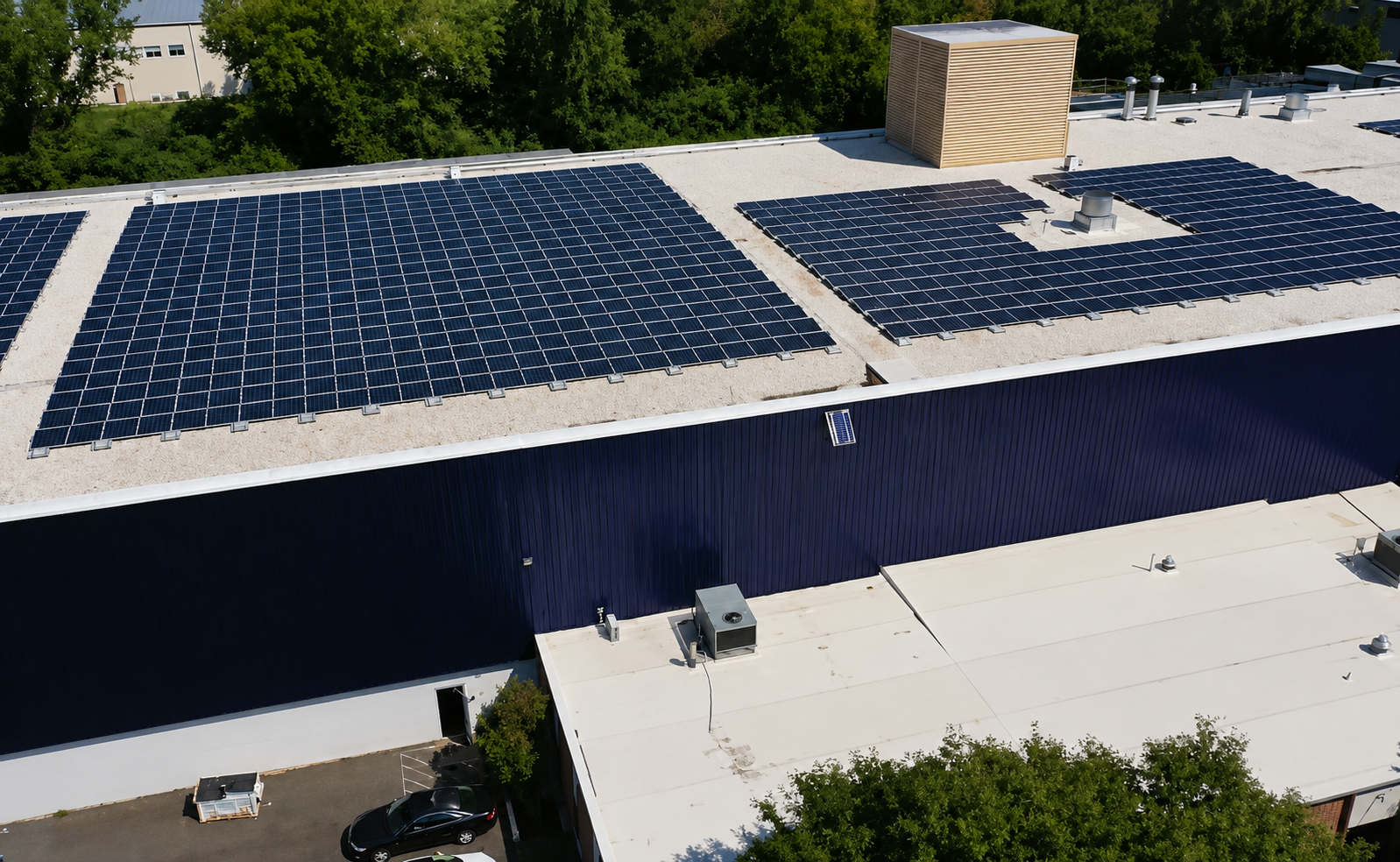
Solar heating harnesses solar energy to introduce warm air into the building without relying exclusively on conventional heating systems. It can be integrated with other bioclimatic solutions to reduce energy demand during the colder months and take advantage of a renewable resource to improve the building’s sustainability and energy efficiency.
Do you want to reduce your building’s energy consumption?
Our technical team will analyse the characteristics of your facilities to identify opportunities for improvement and recommend the most suitable solution. This analysis makes it possible to identify which measures can generate the greatest impact on the building’s energy efficiency.
We will help you reduce energy consumption, improve thermal comfort, and optimise the performance of existing systems through solutions adapted to the real needs of your building. Contact us and obtain the technical advice you need to achieve more efficient, comfortable, and sustainable facilities throughout the year.
Would you like to implement bioclimatic solutions in your building or industrial facility?
Our technical team can advise you with no obligation.
