
Thermal insulation
Greater thermal comfort and protection for your building
Thermal insulation to improve comfort and energy efficiency
Choosing thermal insulation can prevent roofs and façades from overheating in summer. It is also a perfect system for preventing heat loss during winter and condensation on certain surfaces.
At Magnovent, we offer thermal insulator solutions using liquid ceramic coatings. Our products can be applied to roofs, walls and other surfaces. Their purpose is to improve thermal performance while protecting surfaces against environmental conditions.
Our thermal insulation can be used both indoors and outdoors. A solution that adapts to different types of buildings, from industrial warehouses and storage facilities to commercial premises and residential buildings.
What is thermal insulation and what is it used for?
Thermal insulation is a material or system designed to reduce heat transfer between surfaces or environments with different temperatures. Its use helps limit heat entering from outside during warmer months and heat loss during colder months.
In industrial and commercial buildings, insulation is particularly important. This is due to the large roof and façade surfaces exposed to outdoor conditions.
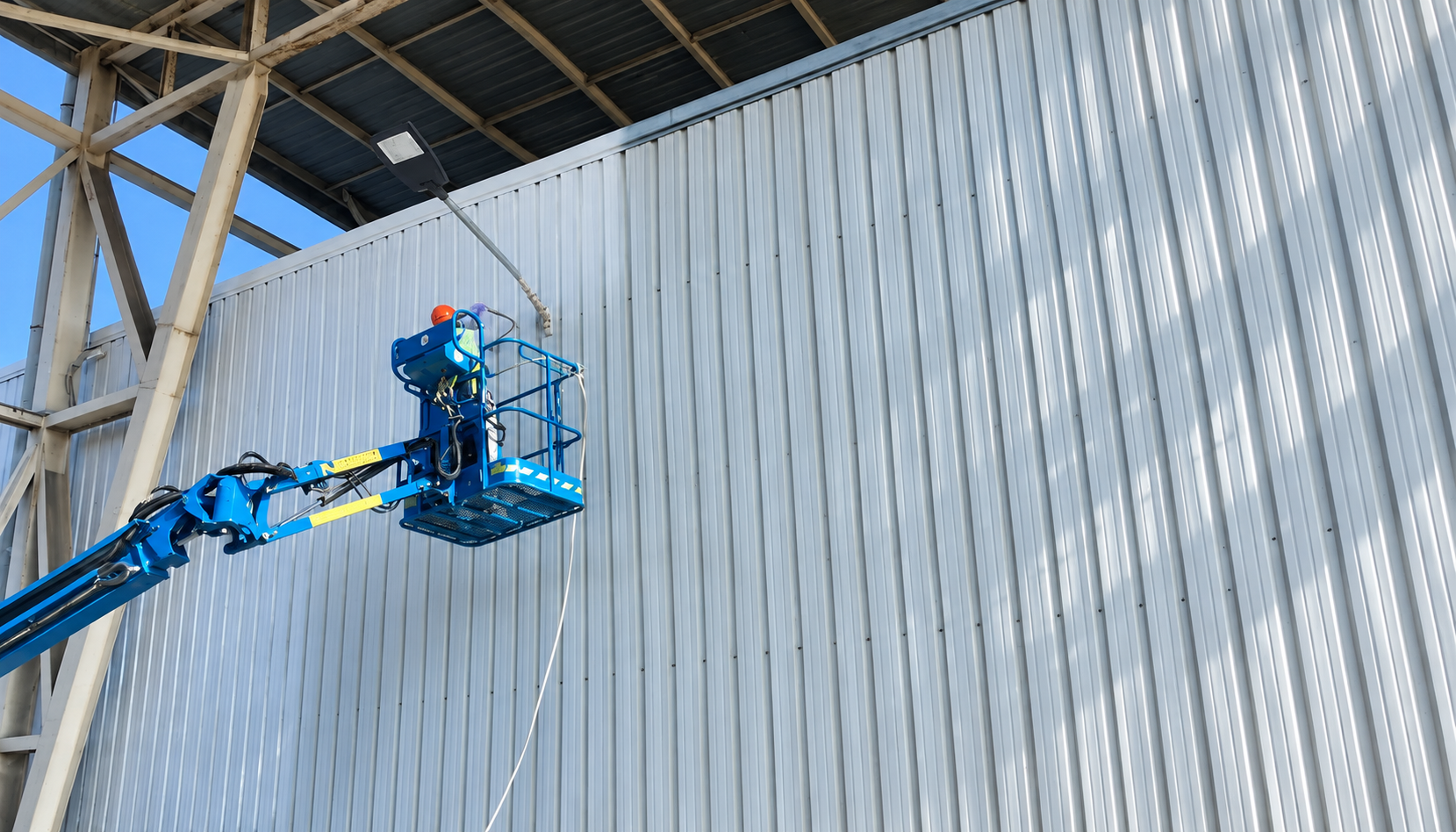
Some liquid thermal insulation solutions can be applied directly to existing surfaces as a coating. A perfect alternative to conventional insulation systems that require the installation of panels or other construction elements.
At Magnovent, we use a thermal insulating ceramic coating that can be applied to different surfaces and geometries. An ideal system for both the interior and exterior of buildings.
What problems can thermal insulation help solve?
A building may experience different thermal problems depending on its construction, orientation, activity and climatic conditions. Identifying where heat transfer occurs makes it possible to determine which surfaces should be treated and how to apply thermal insulation.

Industrial roof overheating
Roofs receive direct solar radiation for many hours each day and can reach extremely high temperatures, transferring some of that heat into the building.

Heat loss in winter station
Insufficient insulation in roofs and walls can cause heat loss to the outside and increase heating requirements, raising the demand for climate control.

Condensation and moisture
Temperature differences between surfaces and indoor air can encourage condensation in certain areas of the building, contributing to surface deterioration.

Unstable indoor temperatures
Poor insulation in roofs and walls can cause indoor temperatures to change quickly depending on outdoor conditions, making it difficult to maintain thermal comfort.

Thermal insulating paint: discover the innovation
The insulating ceramic paint has been meticulously designed to meet the most demanding standards. Today, this innovative technology is widely distributed as an insulating coating, providing outstanding results in terms of energy efficiency and comfort.
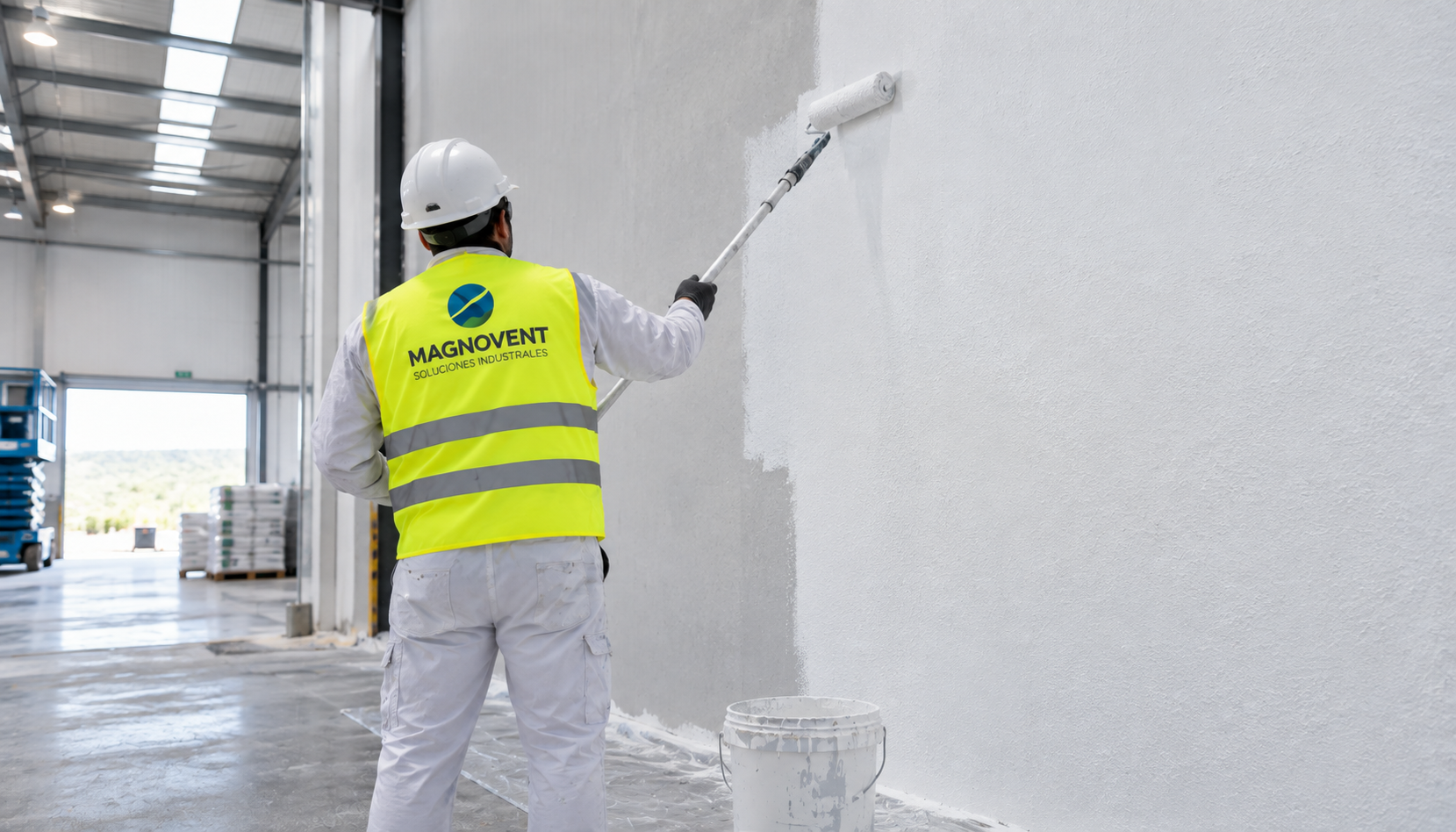
Our thermal ceramic paint constitutes an optimal solution for a wide range of industrial and commercial buildings. Its simple application as paint, either by roller or spray, is carried out without interrupting the daily activities of the building, generating temperature differences of up to 20ºC on the treated surfaces.
Thermal paint can be customized in a variety of colors to suit ceilings and walls with different designs, while its flame retardant nature ensures safety once applied and dried, as it does not spread fire. But its functionality does not stop there; the thermal insulating paint also offers soundproofing properties, reducing noise levels by between 4 and 10 dB.
It has been shown that thermal insulation retains up to 60% more heat during the winter months, while reflecting up to 95% of the sun’s infrared rays.
In addition to its effectiveness in thermal control, this coating contributes significantly to moisture management in roofs and walls of various materials. Its waterproof nature allows it to repel water while permitting vapor to transpire, thus providing anti-condensation protection and maintaining an optimal indoor environment at all times.
Where can thermal insulation be applied?
One of the advantages of liquid ceramic coatings is their ability to adapt to different surfaces, geometries and types of facilities.
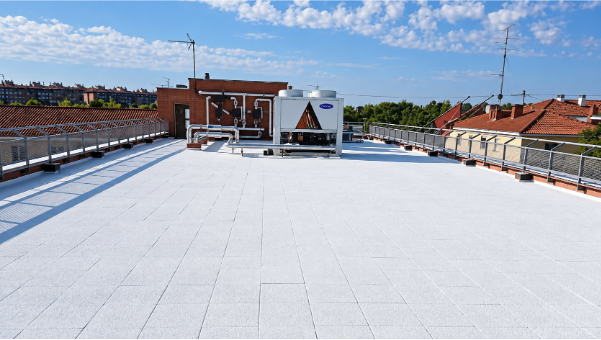
- Industrial roofs: Allows large surfaces directly exposed to solar radiation to be treated and reduces their heating.
- Facades and walls: Can be used to improve the thermal performance and protection of interior or exterior walls.
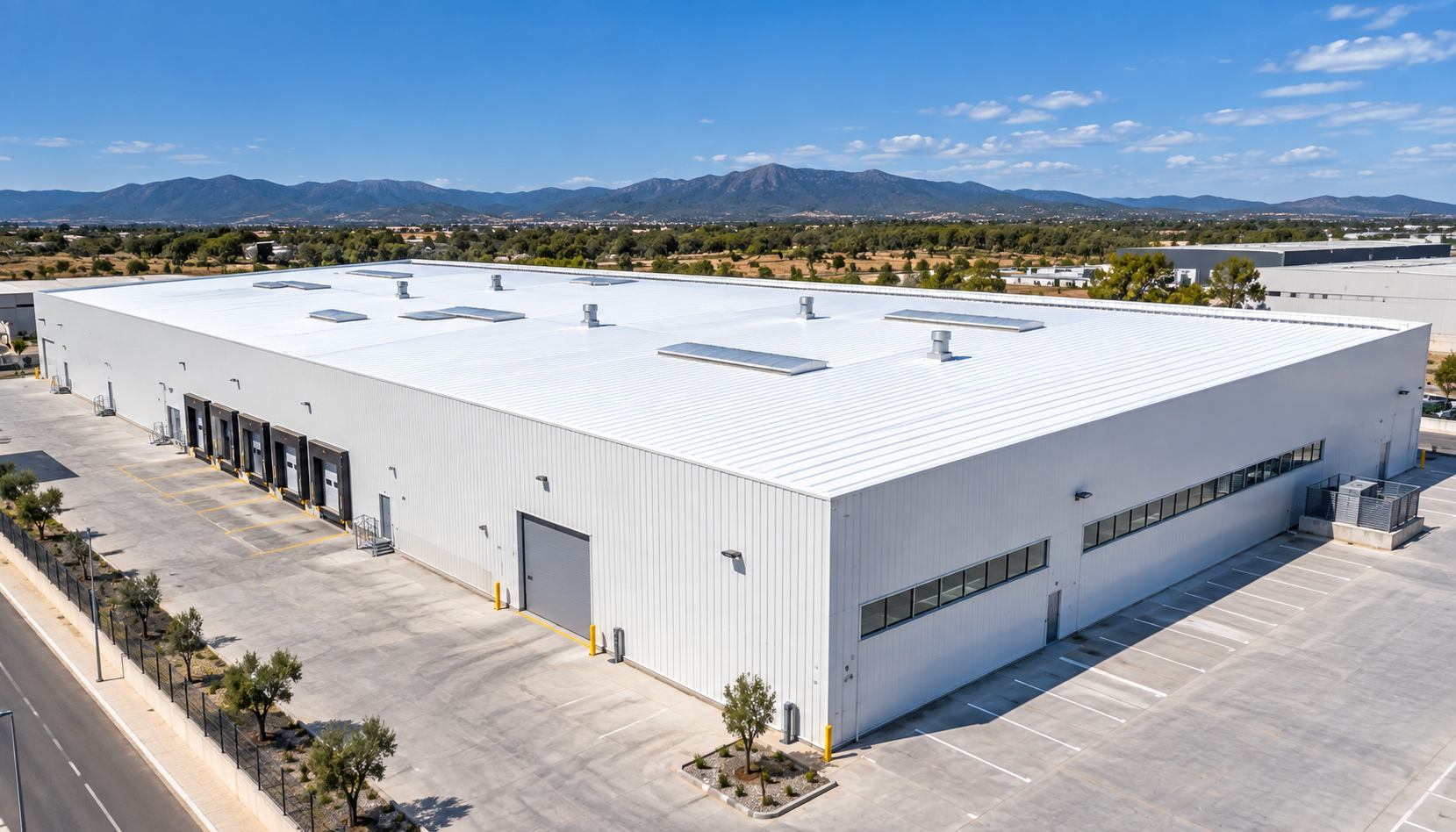
- Industrial warehouses and storage facilities: Particularly interesting in large buildings where the conditions of the building envelope directly affect indoor comfort.
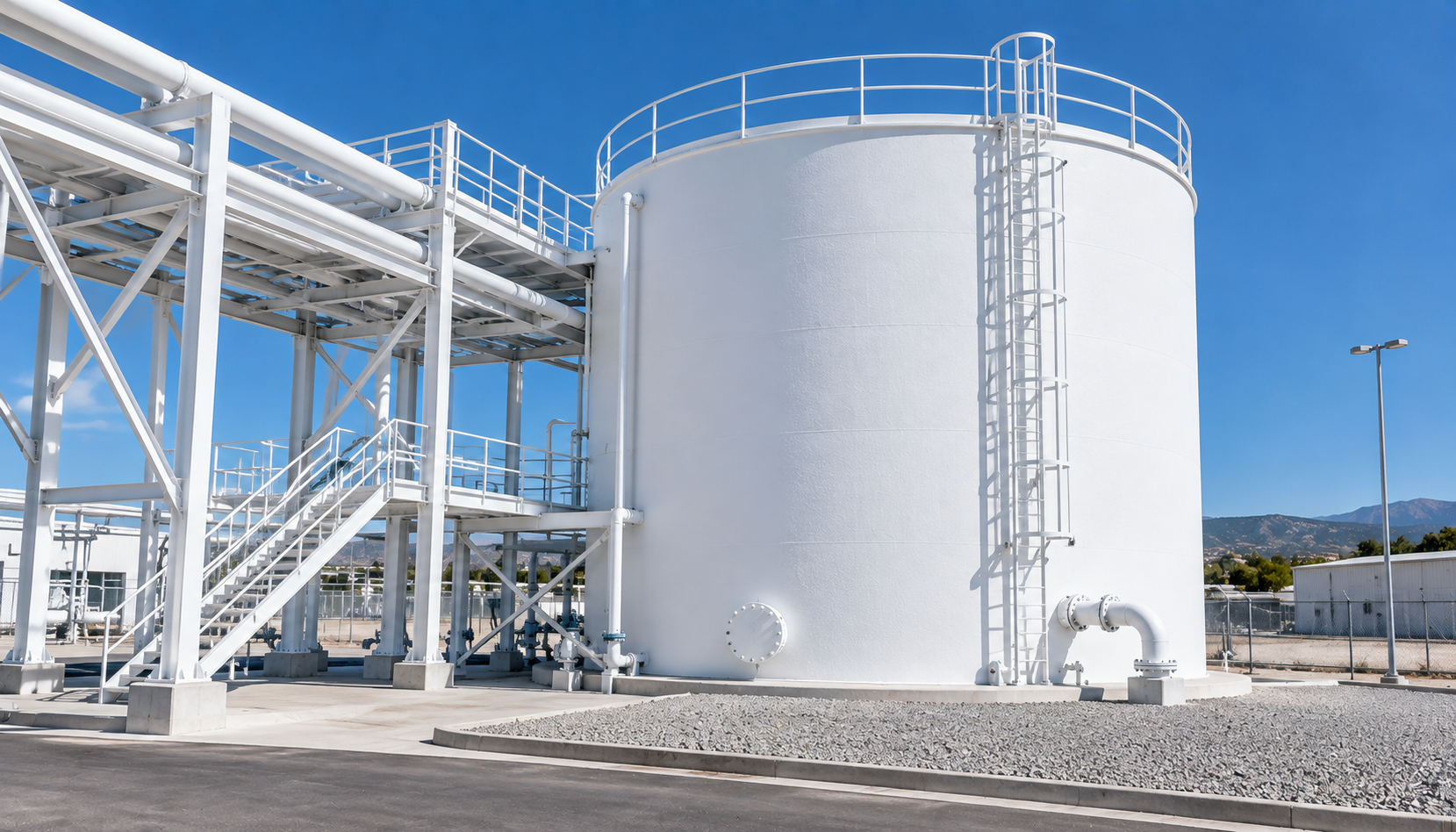
- Tanks and pipes: Its liquid application allows it to adapt to certain curved surfaces or geometries. An ideal solution where other systems may be more difficult to install.
- Metal structures: Can be applied to certain metal surfaces to improve their thermal performance and provide additional protection.
- Commercial and residential buildings: Thermal insulating paints can also be used in different projects to improve indoor comfort or treat specific surfaces without carrying out extensive construction work.

Benefits of ceramic thermal insulation
Ceramic thermal insulation improves the thermal performance of various surfaces and offers benefits in terms of comfort, protection and efficiency.

Greater thermal comfort
Helps limit heat transfer through treated surfaces, promoting more stable indoor conditions while supporting greater overall occupant comfort and energy efficiency.

Improved energy efficiency
Reducing heat gain or loss can significantly lower the overall demand placed on climate control systems and make better use of the energy consumed.

Protection against moisture
The coating can help reduce certain surface condensation problems and provides additional protection against moisture, corrosion and environmental conditions.

Easy surface application
As a liquid coating, it can be applied using a roller or spray gun to surfaces and geometries, avoiding the construction work associated with thicker insulation systems.
Liquid ceramic thermal insulation: A solution applied directly to surfaces
Magnovent’s ceramic insulating paint has been designed as a coating that improves the thermal performance of different surfaces without the need to add thick layers of insulation.
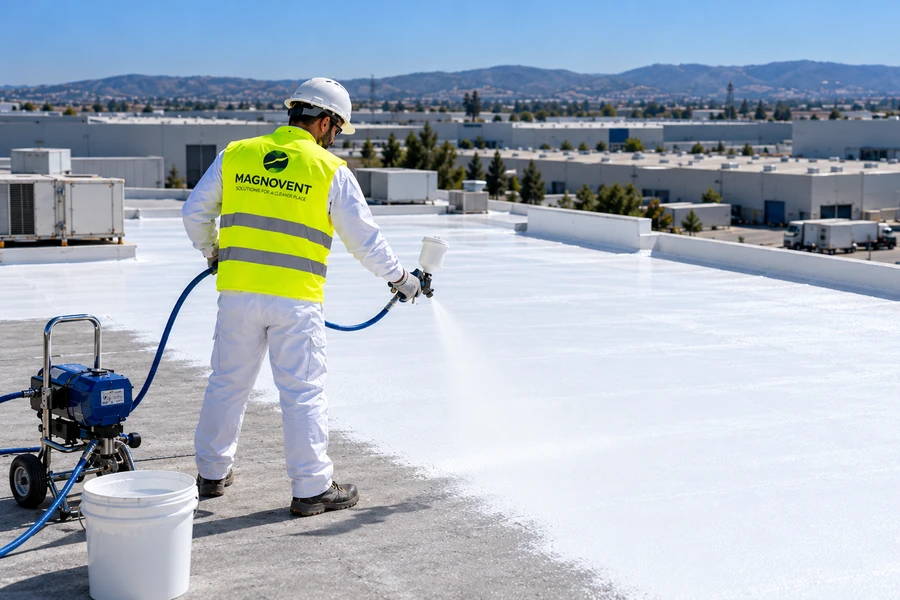
It is applied in a similar way to paint, using a roller or spray gun, allowing it to adapt to roofs, walls, structures and surfaces with different geometries. This feature makes it easier to use in operational industrial and commercial buildings, reducing the need for complex construction work.
In addition to its thermal properties, the cladding helps protect surfaces from water, moisture, and certain environmental conditions, extending its function beyond insulation.
Thermal insulation for exterior surfaces
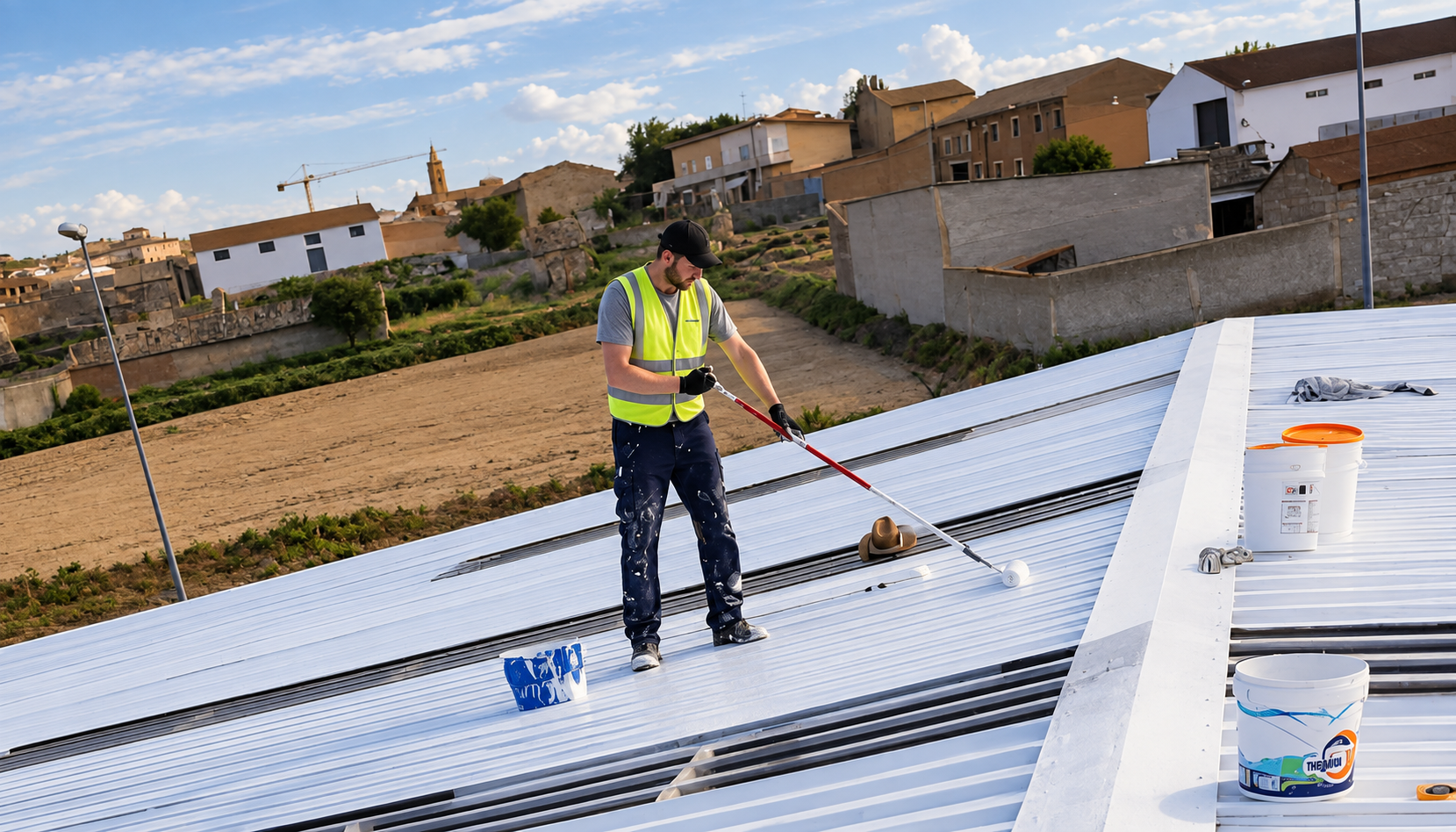
Exterior thermal insulating paint helps limit the heating of treated surfaces. At the same time, it provides a protective layer against water and other outdoor elements.
When applied to roofs and exterior façades, the ceramic coating acts directly on the surfaces most exposed to solar radiation and environmental conditions.
Exterior thermal insulation is particularly interesting for large industrial roofs, where solar radiation can considerably increase surface temperatures during warmer months.
Thermal insulation for interior surfaces
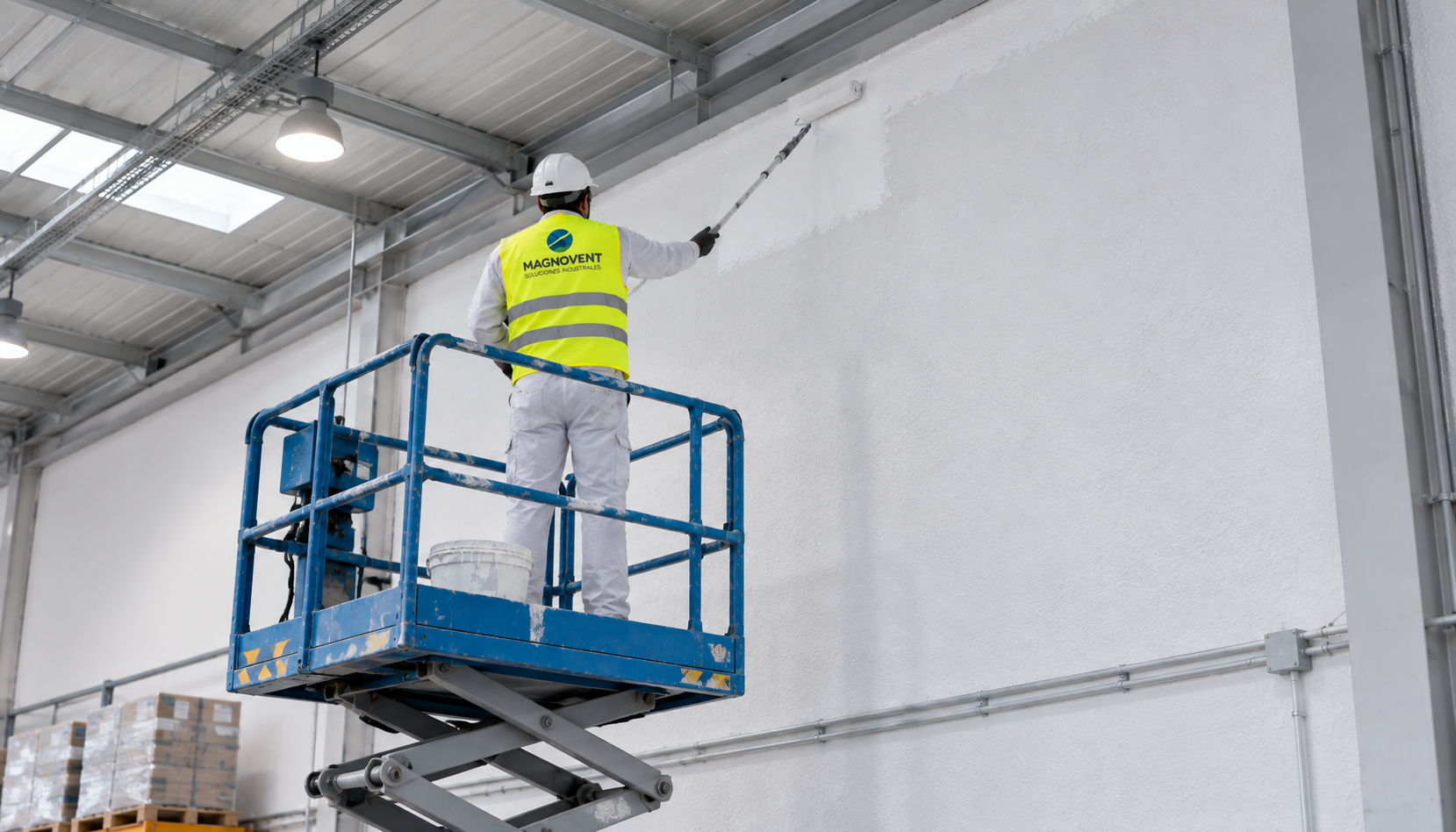
Interior thermal insulation helps reduce heat transfer through treated surfaces and contributes to maintaining more stable indoor conditions. It is usually applied inside buildings or industrial warehouses.
Interior thermal insulating paint can be used on certain surfaces where condensation problems occur due to temperature differences between indoor air and the building’s surfaces. This helps improve their performance in response to temperature and humidity differences.
This solution can be particularly useful when it is not easy to work on the exterior of the building or when the problem is concentrated in specific indoor areas.
Discover how Magnovent’s thermal insulation technology can transform the space and help achieve optimal levels of comfort and sustainability.
Why choose Magnovent for a thermal insulation project?
At Magnovent, we study the characteristics of the building and the surfaces to be treated before recommending a solution. The objective is to determine where the thermal problem occurs and how to address it appropriately.
- Personalised analysis: We study the surfaces, environmental conditions and thermal requirements of each project.
- Tailored solutions: We adapt the coating application to the substrate, location and conditions of each facility.
- Indoor and outdoor application: We can treat different surfaces depending on the origin and characteristics of the thermal problem.
- Comprehensive approach: We combine insulation with other bioclimatic solutions. We complement thermal insulation with ventilation, heating and smart control systems.
- Experience in large facilities: We develop thermal insulation projects adapted to each surface. From industrial buildings to large commercial spaces.
- Technical advice: We support the client from the initial analysis through to the definition and application of each selected system.
Success story: Thermal insulation at Ford Almussafes
At the Ford plant in Almussafes (Valencia), Magnovent applied our ceramic thermal insulation to a metal sheet surface directly exposed to solar radiation. The objective was to reduce façade heating and improve indoor thermal comfort without interrupting the facility’s operations.
According to the results recorded in the success story, the application achieved:
41%
temperature reduction
1,456 m²
surface area covered
20 years
solution lifespan
Magnovent solutions to optimise thermal insulator
The thermal performance of a building does not depend on a single system. For this reason, at Magnovent, we can combine thermal insulation with other bioclimatic solutions to address different factors that influence comfort and energy consumption.
Some of the bioclimatic solutions we use at Magnovent to improve climate control systems and maximize energy efficiency include, among others:

Do you need to improve your building’s thermal insulation?
Our team can analyse the characteristics of your facility and its surfaces to install thermal insulator. This will allow us to identify where heat gains, heat losses or condensation problems occur and determine which solution is suitable for each project.
Contact Magnovent, and we will study how to apply our thermal insulation according to the characteristics and requirements of your project.
Are you interested in our Thermal insulation services and products?
Our technical team can advise you with no obligation.
