
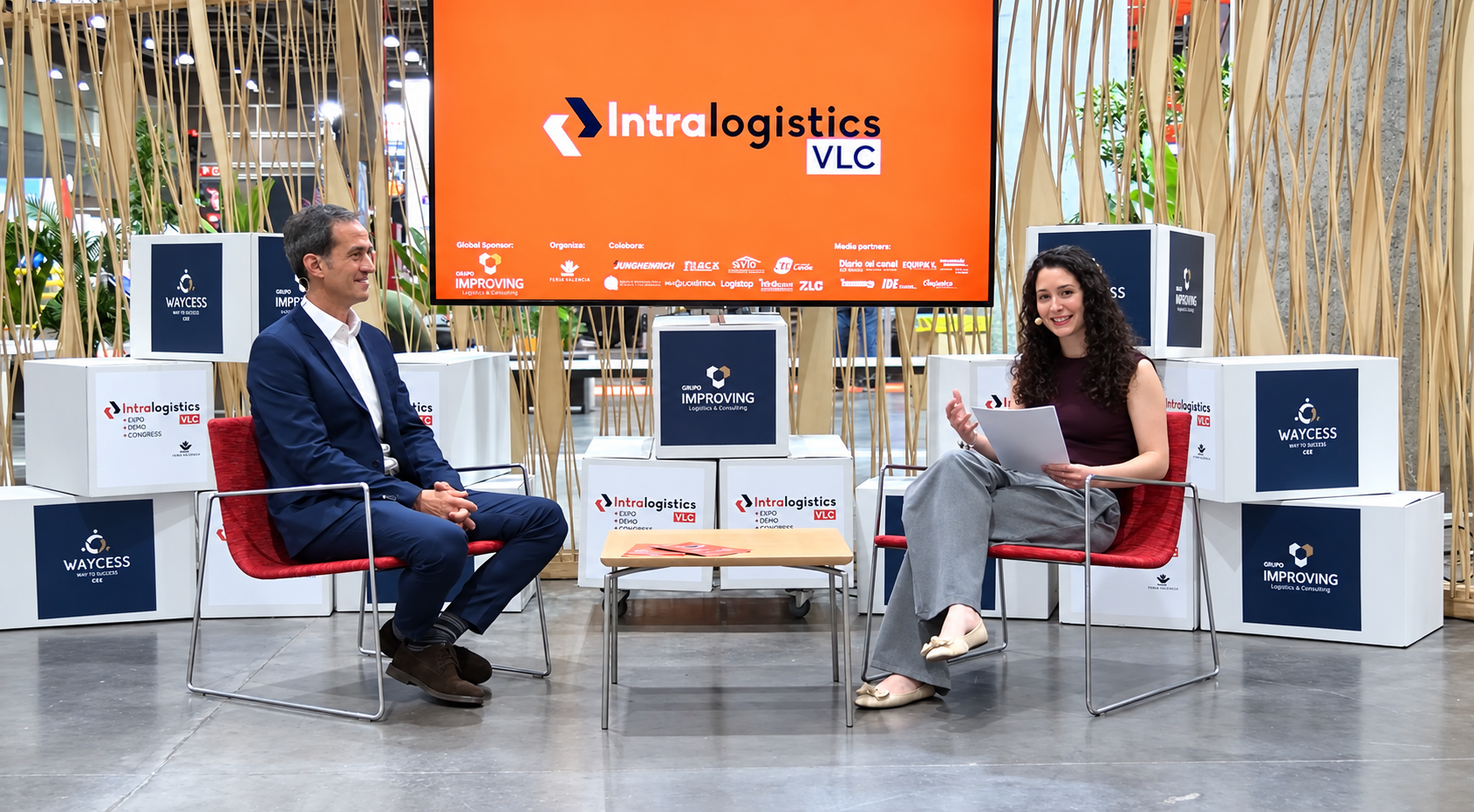
Industrial climate control requires an approach tailored to the specific characteristics of each facility. For this reason, it is essential to assess each project individually and design industrial climate control systems that meet its actual needs.
During Intralogistics VLC 2026, Santiago Labella, Managing Director of Magnovent, discussed some of these challenges. He took part in an interview focused on energy efficiency, thermal comfort and the systems available to improve environmental conditions in large industrial and logistics facilities.
The conversation provides first-hand insight into how Magnovent approaches these projects and the role technology plays in developing more efficient climate control systems tailored to each space.
Interview with Santiago Labella: Managing Director of Magnovent
How can thermal conditions in an industrial building be improved? What role does energy efficiency play? Which solutions can be implemented in large facilities?
In this interview, conducted during Intralogistics VLC 2026, Santiago Labella shares Magnovent’s perspective on some of the main climate control challenges currently facing industrial and logistics companies.
In these facilities, the objective is not simply to increase or decrease the temperature. It is necessary to understand how the building behaves thermally, how air circulates and what each area requires to determine which technologies can provide a more efficient solution.
How to find the most suitable industrial climate control solution for each project
No two industrial facilities are the same. A strategy based on the right industrial climate control systems must begin with an analysis of the specific characteristics of each space and the activities carried out within it.
The main factors to consider include:
- Facility dimensions and height: These determine the volume of air that needs to be managed and how it should be distributed.
- Activities carried out: Machinery, production processes and the concentration of people can generate different thermal loads.
- Work area layout: Not all areas necessarily require the same thermal conditions.
- Doors and access points: Particularly common in warehouses and logistics centres, frequent door openings can significantly affect indoor temperatures.
- Existing systems: A new solution can complement current installations and help improve their performance.
- Energy consumption: To achieve suitable thermal conditions, it is essential to assess the energy efficiency of the proposed solution.
For this reason, industrial climate control solutions must be designed around the actual needs of each project.
Different technologies for large spaces: Industrial climate control systems
At Magnovent, we approach industrial climate control from a comprehensive perspective. Depending on the characteristics of the facility, different technologies can be used independently or in combination.
Industrial climate control systems to improve thermal comfort and energy efficiency
One of the main challenges of industrial climate control is finding the right balance between suitable working conditions and efficient energy use.
In large facilities, conditioning the entire volume of air using conventional systems can result in considerable energy consumption. Analysing how each space is used makes it possible to develop solutions that better match the facility’s actual requirements.
An effective strategy using suitable industrial climate control solutions can help to:
- Improve thermal comfort for people working in the facility.
- Promote more even air distribution and reduce temperature differences.
- Complement existing climate control equipment.
- Optimise energy consumption associated with heating, cooling and ventilation.
- Adapt system operation to the conditions and requirements of each space.
You can learn more in our article on energy efficiency in ventilation, where we explore the relationship between ventilation, energy consumption and business competitiveness.
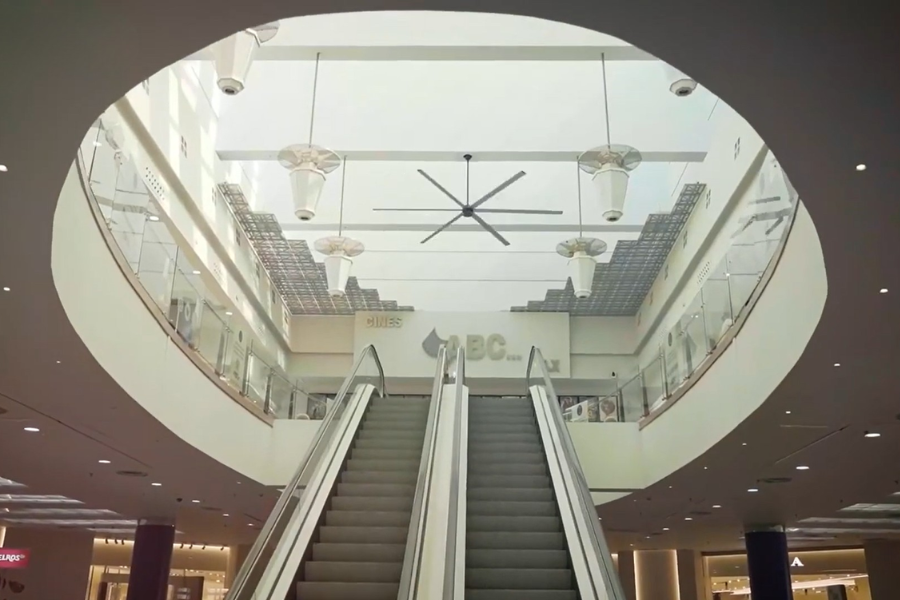
Industrial climate control systems for large facilities
The logistics sector is a good example of the complexity involved in controlling thermal conditions in large facilities.
Warehouses with high ceilings, frequently opened doors, areas with different levels of activity and large volumes of air require strategies specifically designed for these environments.
At Magnovent, we analyse each project to determine which combination of technologies can best meet the facility’s requirements.
If you manage this type of space, you can explore our articles on climate control for logistics warehouses and how to ventilate logistics warehouses to learn more about some of the available solutions.
A climate control strategy tailored to each facility with Magnovent
Santiago Labella’s interview during Intralogistics VLC 2026 reflects the approach we follow at Magnovent:
Climate control in large spaces must be approached individually, combining thermal comfort, energy efficiency and the most suitable technologies for each project.
You can also explore our energy efficiency solutions and discover how we apply different technologies to optimise thermal conditions in large industrial facilities.
Do you need an industrial climate control solution?
At Magnovent, we assess the characteristics of each facility to determine which industrial climate control systems best suit the space, its activities and the objectives of each project.
Contact our team, and we will analyse the specific needs of your facility.
