
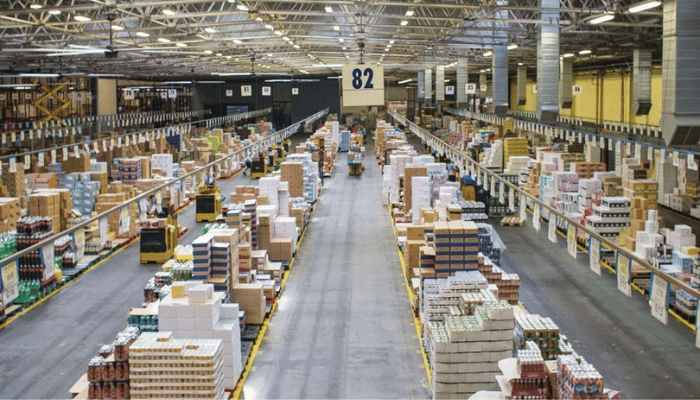
Large enclosed spaces, loading dock doors open at all times, poorly insulated walls and ceilings, dozens of people working in the same facility. All these are the conditions that cause the temperature in a logistics warehouse to be above 30ºC in summer. In addition, the size of these facilities makes the installation of air conditioners really unfeasible as they are very inefficient. So, how can you ventilate logistics warehouses and ensure your workers remain comfortable?
Large enclosed spaces, loading dock doors open at all times, poorly insulated walls and ceilings, dozens of people working in the same facility. All these are the conditions that cause the temperature in a logistics warehouse to be above 30ºC in summer. In addition, the size of these facilities makes the installation of air conditioners really unfeasible as they are very inefficient. So, how can you ventilate logistics warehouses and ensure your workers remain comfortable?
What Is the Ideal Temperature for Logistics Warehouses?
Logistics warehouses face multiple challenges when it comes to maintaining an ideal temperature. Some of the main concerns for warehouse managers and supervisors include:
- Maintaining a suitable temperature to ensure worker well-being.
- Regulating humidity levels, not just for worker comfort but also for proper storage of certain products. Some goods require high humidity, while others need an environment as dry as possible.
- Facilitating efficient loading and unloading of goodsby ensuring proper ventilation inside containers.
Recommended workplace climate conditions
Temperature, humidity, and air velocity should remain within the limits outlined in Annex III of the BOE-A-1997-8669:
- Temperature: Should be maintained between 14ºC and 25ºC.
- Humidity: Should range between 30% and 70%.
- Maximum air velocity: Should not exceed 0.75 m/s.
Impact of Air Velocity on Thermal Comfort Inside Warehouses
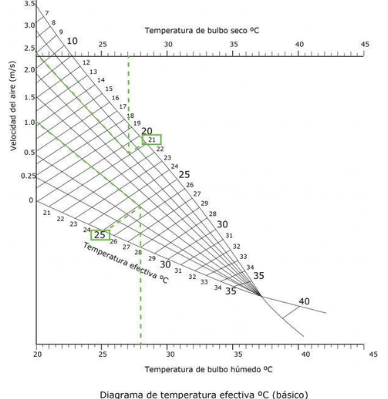
The following chart corresponds to the effective temperature diagram from the UK’s Health and Safety Executive (HSE). It illustrates how increasing air velocity can reduce the perceived temperature inside a logistics warehouse.
One of the examples highlighted in the diagram shows us how in a logistics warehouse at a temperature of 27ºC, we can reduce the thermal sensation up to 6ºC with a current of 2.5m/s. Typically, airflows above 0.8 m/s are not generated at floor level, but even then, that is enough to lower the perceived temperature by 2 or 3 degrees. All our fans include a regulation system, Magnocontrol, that allows you to adjust this airflow speed.
Solutions to Maintain an Appropriate Temperature in Logistics Warehouses
At Magnovent, we offer a range of bioclimatic solutions to maintain the ideal temperature in logistics warehouses and address the thermal challenges these facilities commonly face, especially during the summer. To reduce indoor temperatures and improve workers’ thermal comfort, discover the following solutions from our catalogue:
Thermal Insulation
The first thing to check is that the ceiling or walls of the warehouse do not produce radiation inside. Some ships, especially those built with conductive materials such as metal, are heated by solar radiation and emit that radiation inside.
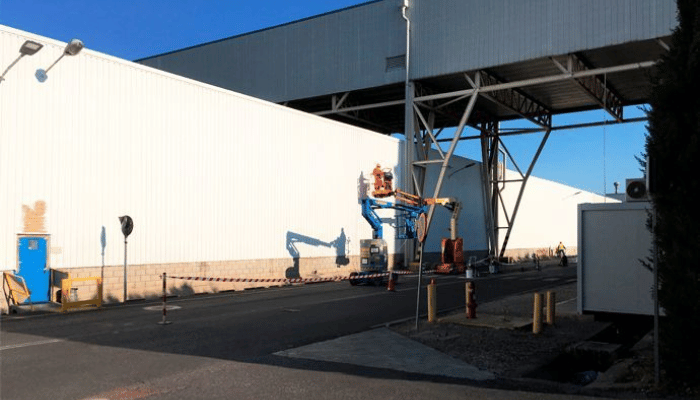
If this is the case, our thermal insulation can help. Applied as a coating, it can reduce warehouse temperatures by up to 20ºC by reflecting solar radiation and preventing heat from penetrating the building. This not only results in significant energy savings but also avoids major construction work.
However, in logistics warehouses, where we usually find large areas with high ceilings, a thermal insulator will not always be enough
Ceiling fans
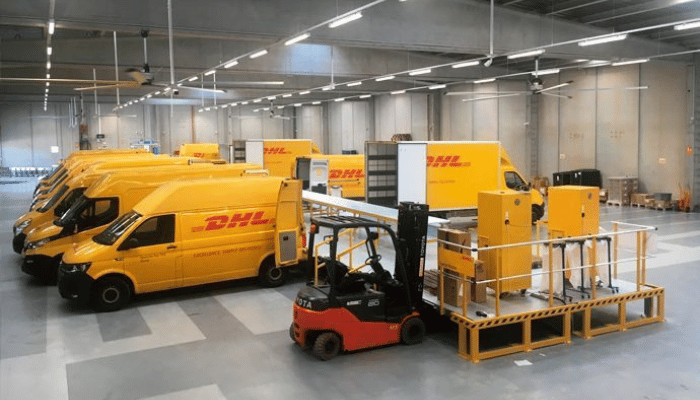
At first glance, installing conventional HVAC systems like air conditioning may seem like the ideal solution. But for it to be effective, it would need to cool the entire volume of air inside the building, a very time-consuming and expensive task.
That’s why Magnovent offers a more affordable and instantly effective alternative: ceiling fans.
Ceiling fans are highly efficient for constantly moving large volumes of air. By creating a gentle breeze, they reduce the perceived temperature and help cool the air inside the warehouse. Unlike traditional air conditioning, ceiling fans do not need to cool all the air in the building to make workers feel comfortable (under 25ºC). They also help reduce energy consumption and require minimal maintenance, making them a cost-effective long-term solution.
Magnovent HVLS Industrial Fans
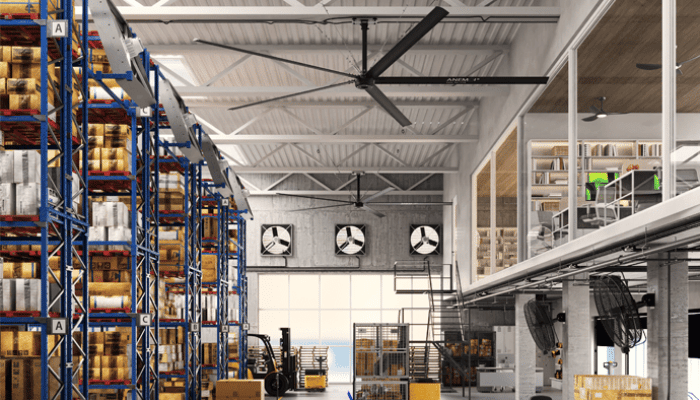
For large logistics warehouses with ceilings higher than 7 meters, we recommend our HVLS industrial fans. These fans move large volumes of air at low speeds, creating a constant breeze that reduces perceived temperature throughout the entire facility. Their large blades cover a wide area, reaching up to 1,400 m² with a single unit. HVLS fans are also extremely quiet, making them ideal for continuously active work environments.
Among the main benefits of HVLS fans are their ability to improve air circulation, reduce the perceived temperature, and optimize energy consumption in large logistics warehouses, creating much more comfortable working environments.

Portable industrial fans
Magnovent’s portable industrial fans are easy to move, allowing them to be relocated within the warehouse based on specific needs. When a temporary or localized solution is needed, these fans help reduce heat and improve ventilation in specific work zones. Equipped with wheels and integrated handles, they’re easy to transport and can be used immediately after installation thanks to their simple connectivity.
How to Regulate Humidity in Your Logistics Warehouse Based on Your Needs
Whether we want to increase or decrease our level of relative humidity in our logistics warehouse, at Magnovent we have devised highly effective solutions for both cases.
In case the humidity level in the warehouse is very high, air renewal is the option we always recommend. This can be achieved with either a directional wall-mounted industrial extractor fan, HVLS industrial fans orceiling fans, which will extract and bring in fresh air if an opening is left in the workshop, such as a door, window, grille, or smoke vent.
On the contrary, if the humidity in the warehouse is insufficient, combining misting systems with our ceiling fans will allow for a homogeneous and efficient distribution of humidity.
How to properly ventilate containers to ensure the well-being of workers during loading and unloading?
As anyone who has worked in a loading dock knows, containers often arrive at logistics warehouses with really high temperatures inside.
To make the job easier for operators, we suggest installing our Airgate directional fan on the loading docks. Working at high revolutions, it generates a continuous air current that moves all the air inside the container, renewing it and allowing work at a more comfortable temperature.
By considering these measures, you will be able to condition your logistics warehouse to create a pleasant working environment for your employees.
If you have any further questions and would like us to study your case in more detail, please do not hesitate to contact us.
