

Knowing how to choose a ceiling fan that suits your needs is probably not an easy task. That’s why at Magnovent, we bring you the ultimate guide to help you understand, step by step, how to choose a ceiling fan without losing your mind. Below, discover the different factors to consider when selecting the best ceiling fan.
Fan Size
The size is one of the most important factors when figuring out how to choose a ceiling fan. The fan’s efficiencyand even the comfort of the room’s occupants depends on it.
So, what size should a ceiling fan be depending on the size of the room? To move more air in larger spaces, both the number and the diameter of the blades are key. In smaller rooms, fewer and smaller blades are more appropriate.you!
| Room size | Fan diameter |
|---|---|
| Small rooms up to 13 m² | Up to 112 cm |
| Medium rooms from 13 to 20 m² | From 112 to 122 cm |
| Large rooms over 20 m² | Up to 132 cm |
Ceiling Fan With or Without Light?
Another key factor when choosing a ceiling fan is whether or not it should have an integrated light. Often, a ceiling fan replaces the main ceiling light in a room. In this case, a ceiling fan with a light can be a great choice. However, it’s important to remember that the fan’s main function is to ventilate not to light the space so the lighting level may be lower than desired. You may want to add extra lighting if needed.
On the other hand, choosing a ceiling fan without a light is the perfect option for rooms that already have adequate lighting from another fixture or from natural light.

Silent Ceiling Fan
How to choose a silent ceiling fan? If the space where you’re installing the fan requires quiet—like bedrooms or offices—go for a ceiling fan with a DC (direct current) motor. These motors are more energy-efficient (up to 70% savings) without sacrificing performance. They are also very quiet due to low heat generation, reduced friction, and lower wear over time.
However, traditional and more affordable ceiling fans typically come with AC (alternating current) motors, which are noisier than the previous models.
Blade Material
When investing in a ceiling fan, you should consider the material of the blades based on the room and the function the fan is intended to perform.
| Material | Recomended use | Advantages | Limitations |
|---|---|---|---|
| Wood | Living rooms, bedrooms, and offices | Warm aesthetic, easy to integrate into the décor | Can deteriorate with heat and humidity |
| Plastic | Interiors with moderate use | Durable, easy to maintain. Minimalist and modern aesthetic | Shorter lifespan with heavy use. Can warp at high temperatures |
| Metal | Outdoor areas, industrial, or public spaces | Very strong and durable with little maintenance | More dangerous if touched while in operation |
Does it have reverse mode?
Having a reverse mode in a ceiling fan is increasingly common, as it provides a big advantage when choosing one. This mode ensures ideal performance throughout the year, as the blades can rotate in the opposite direction so that cold air rises and hot air descends, redistributing it throughout the room to reach an optimal temperature during the colder months.
This complements other climate control systems, helping maintain warmth for a longer time, reducing the need for heating systems and saving energy and costs.

Magnovent ceiling fans
At Magnovent we know how important it is to know how to choose a ceiling fan. That’s why we present to you the Magnovent ceiling fans:
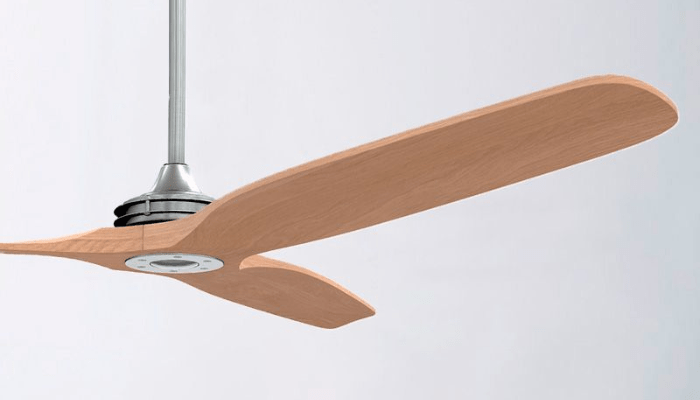
Boreas ceiling fan
The Boreas wooden ceiling fan is designed with a DC (direct current) motor, making it an ideal solution for bedrooms or offices thanks to its silent operation. This fan circulates air efficiently and increases wind flow in the room, maximizing airflow. Magnovent’s wooden ceiling fans adapt to spaces that demand high standards of style and aesthetics.

Airlux ceiling fan
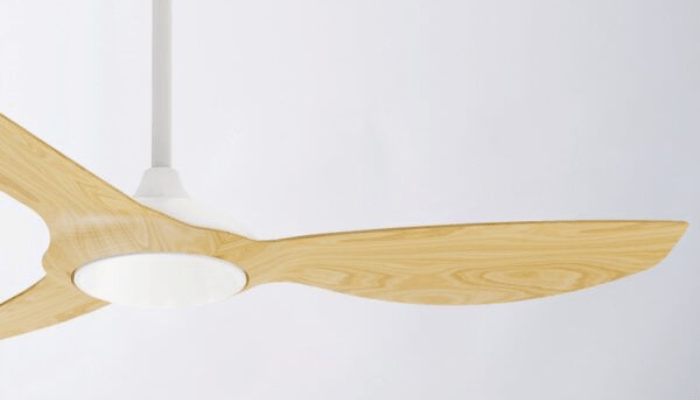
The silent Airlux ceiling fan is ideal for maintaining a cool and comfortable environment. Its DC motor enables quiet operation, and the LED light—which can be integrated or not—illuminates different rooms perfectly.
 !
!Cefiro ceiling fan
If you’re looking for a stylish fan, you’ve found the best one: the Cefiro fan. This model from our catalog offers greater freshness in both indoor and outdoor spaces.
If you still don’t know which Magnovent ceiling fan to choose, check out our ceiling fan comparison and see which one best suits your needs.
Now that you know how to choose a ceiling fan and are familiar with the different models in our catalog, choose the best ceiling fan for you!
Frequently asked questions about choosing the right ceiling fan
How can I tell if a ceiling fan will really be quiet before buying it?
In general, a ceiling fan is considered quiet when it operates between approximately 20 and 40 dB, a noise level comparable to a quiet home environment. Beyond that, overall comfort depends largely on how the fan is designed.
One of the most important factors is the type of motor. Magnovent ceiling fans feature a DC motor (direct current), a key technology for reducing noise. This type of motor provides:
- Much smoother and more stable operation
- Less vibration while the fan is running
- Gradual speed changes without sudden noise spikes
- Greater efficiency by moving more air with less effort
What are the most common mistakes when choosing a ceiling fan?
Choosing a ceiling fan may seem simple, but several details can make the difference between a great purchase and an inefficient solution. Some of the most common mistakes include:
- Focusing only on the design: Appearance matters, but performance, motor type, size, and material quality are equally important.
- Choosing the wrong fan diameter: A fan that’s too small won’t move enough air, while one that’s too large may feel uncomfortable for the room.
- Ignoring ceiling height: The distance between the fan, the ceiling, and the floor directly affects airflow and installation safety.
- Choosing the wrong blade material: Not all materials are suitable for every environment. For example, wood is not the best option for humid areas or outdoor spaces.
- Overlooking the motor type: DC motor ceiling fans, such as Magnovent models, provide quieter, more efficient, and more stable operation.
- Not considering how the space is actually used: Every room has different ventilation needs, and the fan should match them.
At Magnovent, we can help you avoid these mistakes and choose the ceiling fan that best suits your space, ventilation requirements, and comfort expectations.
How do I know if a ceiling fan will be enough to cool the entire room?
To determine whether a ceiling fan can effectively cool a room, the most important factor is choosing a model that matches both the room size and ceiling height. Key factors to consider include:
- Room size: The larger the room, the larger the fan diameter should be to circulate air effectively.
- Ceiling height: High ceilings may require a larger fan or a specialized installation so airflow reaches the occupied area.
- Blade diameter: The blades should be appropriately sized for the room. A fan that is too small won’t cool the entire space efficiently.
- Room layout: A square room behaves differently from a long, open, or divided space. The room’s shape also affects air circulation.
- Motor type and efficiency: Magnovent ceiling fans feature DC motors, providing quieter, more efficient, and more stable performance while delivering comfortable airflow every day.
At Magnovent, we can help you select the right ceiling fan based on your room dimensions, ceiling height, and desired comfort level, ensuring you avoid choosing a model that is either undersized or oversized for your space.
What maintenance does a ceiling fan require?
Ceiling fan maintenance is simple, but it should be carried out regularly:
- Clean the blades and housing regularly with a damp cloth.
- Check for any unusual noises.
- Make sure the fan is securely attached to the ceiling.
- Verify that the blades remain properly balanced.
- Check the remote control or control system.
