
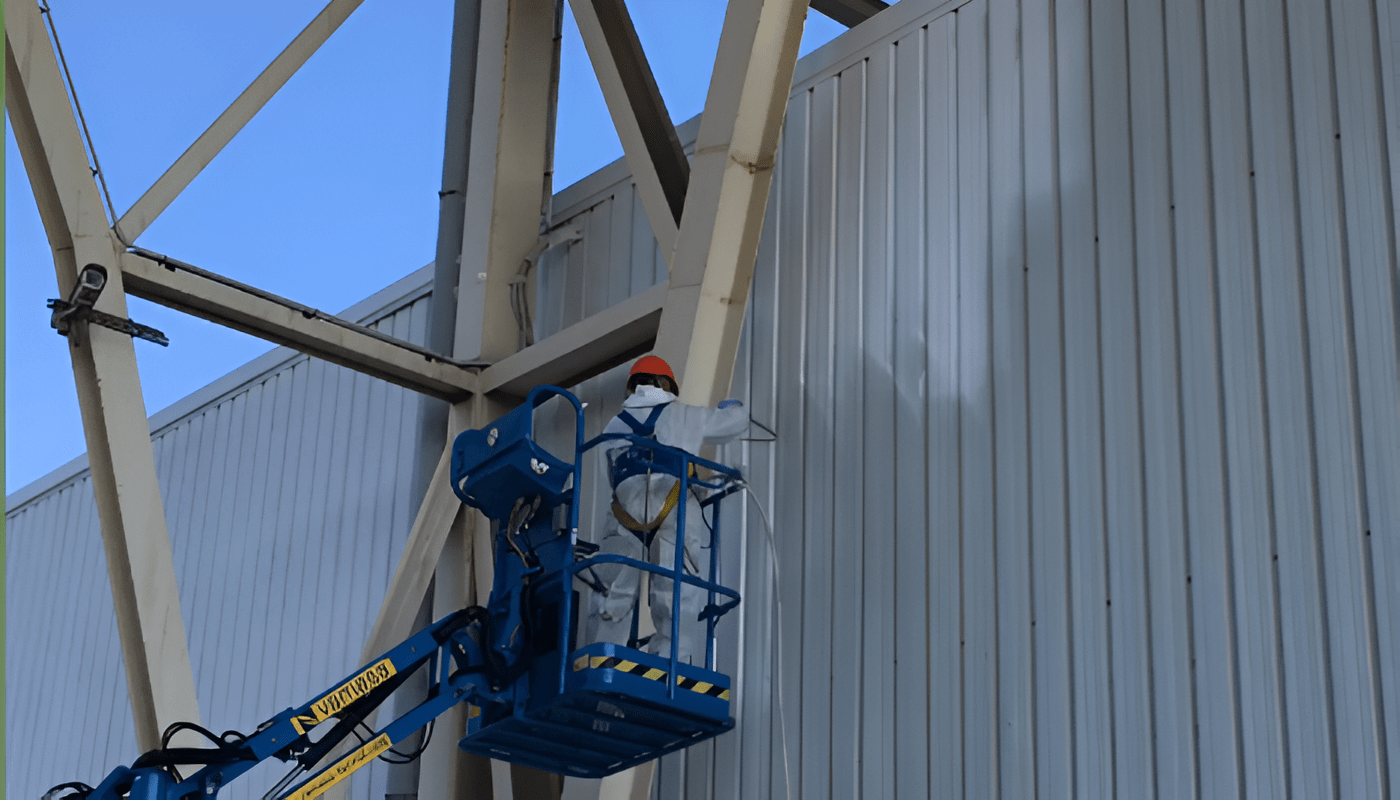
In industrial, commercial, and logistics environments, energy efficiency has become a key factor. Thermal insulating paints are emerging as a simple yet effective solution to improve thermal comfort, reduce energy consumption, and extend the lifespan of facilities.
In industrial, commercial, and logistics environments, energy efficiency has become a key factor. Thermal insulating paints are emerging as a simple yet effective solution to improve thermal comfort, reduce energy consumption, and extend the lifespan of facilities.
In this article, we’ll explore what thermal insulating paints are, their benefits, how to choose them correctly in Spain and Europe, where to apply them, and why Magnovent can assist you with their professional application.
What are thermal insulating paints?
Exterior and interior thermal paints are acrylic or semi-crystalline coatings that incorporate ceramic microspheres, reflective materials, or components with low thermal conductivity. Their function is to create a barrier that limits heat transfer by conduction or reflection, reducing the thermal load on painted surfaces.
In a warehouse, storage facility, or metal roof, applying thermal barrier coatings means reducing the absorbed solar radiation or internally generated heat, which helps lower air conditioning demand.
Key benefits of thermal insulating paints
Applying thermal paints to the exterior and interior of a commercial or industrial facility offers multiple advantages:
- Energy consumption reduction: some studies estimate savings of between 10% and 30% in air conditioning when applying heat-reflective coatings.
- Improved thermal comfort: by limiting temperature spikes and heat buildup, a more stable working environment is achieved for employees and machinery.
- Condensation, mold, and moisture prevention: thermal insulating paints can help break thermal bridges and reduce the occurrence of indoor moisture.
- Quick installation with minimal construction impact: unlike other insulation systems, it’s applied like regular paint, without sacrificing usable space.
- Improving the corporate image: securing a space that meets energy efficiency criteria reinforces the company’s environmental responsibility.
When does it make sense to apply interior and exterior thermal paints in a business?
If your company has any of the following characteristics, Magnovent’s thermal insulating paints can be a very smart and innovative investment:
- Industrial building, warehouse, or workshop with a metal or sheet-metal roof where heat accumulates.
- Commercial space with a large roof or walls exposed to the sun.
- Offices or technical rooms that require constant air conditioning at high costs.
- Facilities seeking energy certification or a reduction in their carbon footprint.
In these cases, exterior and interior thermal paints can complement other improvement measures (roof insulation, efficient ventilation, smart climate control systems).
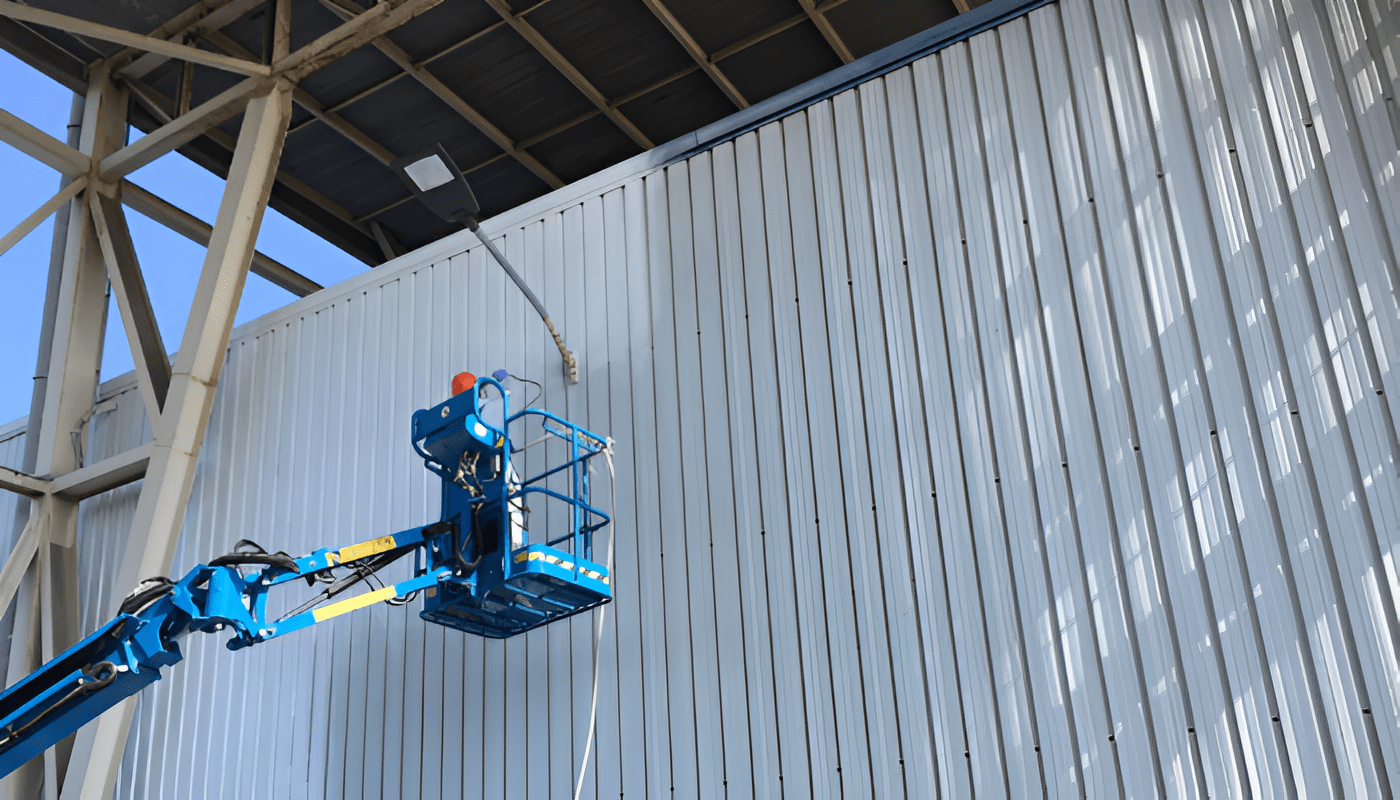
Thermal insulating paints at Magnovent
At Magnovent, we understand that every facility has specific air conditioning and energy efficiency needs. That’s why we work with high-quality interior and exterior thermal paints, designed to deliver superior performance in both indoor and outdoor applications.
Our products feature technology based on ceramic microspheres and reflective compounds that guaranty a significant reduction in surface temperature and energy consumption. Furthermore, they are certified according to European standards and can be easily applied to a wide variety of surfaces.
Whether you’re looking for a solution for an industrial warehouse, a logistics center, offices, or a private residence, contact us and we’ll help you select the ideal thermal insulating paint to maximize comfort and reduce operating costs.
Recommended places and sectors for applying thermal insulating paints
Magnovent’s interior and exterior thermal paints can be applied in a wide variety of environments and sectors. Some examples:
- Homes: attics, loft spaces, garages, or terraces where comfort and energy savings are sought.
- Offices and workplaces: spaces with intensive air conditioning or large facades.
- Businesses and commerce: shops with display windows and glass roofs where heat accumulates.
- Industries and logistics: warehouses, distribution centers, workshops, or hangars with metal roofs and large volumes.
- Hospitality and leisure: event venues, restaurants, or gyms with large windows or glass enclosures.
Applying Magnovent’s thermal shield coatings in these scenarios allows for optimizing the building’s thermal performance and reducing operating costs.
Can interior and exterior thermal paints be used?
One of the advantages of thermal insulating paints is their versatility: they can be used both indoors and outdoors, meeting a variety of needs:
- Exterior thermal paints: roofs, facades, metal roofing, and sun-exposed walls. Here they protect against radiation, reduce surface temperature, and help with overall insulation.
- Interior thermal paints: ceilings, cold storage walls, machine rooms, or offices. Indoors, they help control condensation, improve comfort, and reduce thermal impact in spaces where air conditioning is already operating intensively.
Thanks to this duality, they can be part of integrated energy efficiency solutions throughout the building envelope.
How to choose the right thermal insulating paints for your business
To ensure that thermal barrier coatings perform their function in a professional setting, we recommend evaluating:
- Surface type: interior or exterior, ceiling or wall, sheet metal or concrete.
- Climatic conditions of the region (Spain/Europe): solar exposure, orientation, altitude.
- Compatibility with other installed systems: waterproofing, ventilation, air conditioning.
- Product certifications and warranties: solar reflectance, thermal conductivity, durability.
- Surface preparation: cleaning, priming, repairing cracks or corrosion.
- Expected lifespan and maintenance: although its application is simple, durability may depend on the environment.
A well-informed choice of exterior and interior thermal paints ensures a better return on investment and greater efficiency for your business.
Practical application: Steps to install thermal insulating paints
The correct application of thermal barrier coatings is key to ensuring their long-term effectiveness. Although its installation doesn’t require major construction or complex investments, it is essential to follow an appropriate methodology, respecting drying times, environmental conditions, and the manufacturer’s recommendations.
- Surface preparation: remove dirt, rust, or irregularities.
- Apply primer if necessary
- Paint preparation and sprayer
- Painted in two coats according to the manufacturer’s specifications.
- Finish verification and thermal reflectance (when applicable)
- Maintenance: periodic cleaning, corrosion control, visual inspection
Whether on roofs, facades, or interiors, a well-executed application can make all the difference in a building’s thermal performance. By following these steps, insulating thermal paints achieve their true purpose in industrial or commercial settings.
Integration of exterior and interior thermal paints with comprehensive energy efficiency systems
Interior and exterior thermal paints do not work in isolation; rather, they are enhanced when they are part of a comprehensive energy efficiency strategy. This includes proper ventilation, smart climate control, additional insulation, and passive design solutions tailored to the environment. In Spain and Europe, these combined measures contribute to compliance with regulations such as the CTE or the nearly zero-energy building (nZEB) standards.
Additionally, in many facilities it is advisable to combine different climate control systems to maximize thermal comfort and reduce energy consumption. For example, in summer, a roof treated with thermal insulating paints can be complemented by ceiling or HVLS industrial fans to circulate air and reduce the perceived temperature without having to run the air conditioning intensively. In winter, these same surfaces help retain heat, while fans with reverse mode and an efficient heating system ensure uniform distribution of warm air.
By strategically integrating these technologies, you achieve higher performance at a lower cost, improve occupants’ well-being, and reduce the building’s environmental footprint.

Magnovent Solutions: Innovation and professional service
At Magnovent, we work to offer thermal insulating paints and energy efficiency solutions that go beyond simply applying the coating. We have over a decade of experience in industrial and commercial HVAC in Europe, developing our own technology and providing a comprehensive service that ranges from technical consulting to complete installation.
Our equipment and products are designed to meet the most stringent European regulations, offer minimal energy consumption, blend esthetically into any environment, and integrate with automation or home automation systems.
Additionally, we provide technical coverage throughout Spain and Europe, personalized consulting, a competitive warranty, and comprehensive service models (including post-application maintenance). With Magnovent, your energy efficiency is a turnkey solution.
Why choose Magnovent’s thermal insulating paints?
In a market with multiple passive climate control solutions, Magnovent’s thermal shield paints stand out for their proven effectiveness, versatility of application, and certified quality. What sets us apart?
- Advanced insulation technology: we use formulations based on ceramic microspheres and high-quality reflective compounds, capable of significantly reducing surface temperature and radiant heat transfer.
- Demonstrable results: in real industrial and commercial facilities, our paints have reduced indoor temperatures by up to 20 °C in summer, optimizing climate control and comfort without the need for intensive air conditioning.
- Application without construction work: our solutions are designed to be applied directly to roofs, facades, or interior ceilings, without disrupting the business’s daily operations.
- Compatibility with other HVAC systems: ideal for combining with HVLS fans, radiant heating, or mechanical ventilation equipment, reinforcing overall energy efficiency.
- Technical support and personalized advice: at Magnovent, we don’t just sell products; we support our customers with a comprehensive service, from the initial diagnosis to installation and performance monitoring.
Choosing Magnovent means betting on innovation, energy savings, and a genuine commitment to sustainability for your business.
Transform your business with Magnovent’s thermal insulating paints.
change: it’s a strategic investment in energy savings, comfort, and sustainability. If you have warehouses, offices, or logistics centers, this solution can make a real difference in operating costs and performance.
At Magnovent, we recommend taking decisive action, evaluating your building, and applying exterior and interior thermal paints as part of a comprehensive climate control strategy. This way, you’ll optimize your energy consumption, improve well-being, and reduce your carbon footprint.
Contact our team for personalized advice on which interior and exterior thermal insulating paints are ideal for your personal or work space.
Frequently Asked Questions about Thermal Insulating Paints
What are thermal insulating paints and how do they work?
Thermal insulating paints are special coatings that incorporate ceramic microspheres, reflective materials, or low-conductivity compounds.Their function is to act as a barrier against heat transfer by reflection or conduction, limiting the thermal load on roofs, walls, or facades. Thanks to this, it reduces absorbed solar radiation and/or internally generated heat, thereby lowering the installation’s air conditioning demand.
In what environments are thermal insulating paints for exterior and interior use most useful?
Exterior thermal paints are mainly applied to metal roofs, facades, or walls exposed to the sun, where they help reduce surface temperature and, consequently, the building’s overall thermal load. Interior thermal paints are used on ceilings, the walls of air-conditioned rooms, or areas at risk of condensation, where they contribute to thermal comfort, prevent moisture, and improve the performance of air-conditioning systems.
What are the main benefits of applying thermal insulating paints in a business?
Applying thermal barrier coatings can offer multiple advantages: reduced energy consumption (some studies estimate savings of 10% to 30%), improved thermal comfort by preventing temperature spikes, prevention of condensation, mold, and moisture, quick installation without major construction compared to traditional systems, and a more sustainable image for the company.
When is the right time to invest in thermal insulating paints?
The investment makes sense when you have facilities such as industrial warehouses with metal roofs, logistics centers with roofs heavily exposed to the sun, offices with intensive air conditioning, or spaces seeking energy efficiency certifications. In these cases, Magnovent’s thermal insulating paints can complement other improvements such as efficient ventilation or additional insulation.
How is the appropriate thermal insulating paint chosen for each case?
To choose correctly, it is necessary to have a clear objective (fire protection, condensation control, noise reduction, etc.) and to evaluate the type of surface (interior or exterior, roof or wall, metal sheet or concrete), the region’s climatic conditions, compatibility with other installed systems (ventilation, air conditioning), product certifications (reflectance, thermal conductivity, durability), and surface preparation requirements (cleaning, priming). An informed choice guaranties a better return on investment.
How are thermal insulating paints installed and what maintenance do they require?
Application is similar to conventional painting, but with greater technical attention: a clean, prepared surface, possible priming, two-coat application per specifications, and verification of the thermal finish when necessary. As for maintenance, a visual inspection, periodic cleaning, and monitoring for corrosion or surface damage are sufficient to ensure the coating’s durability and effectiveness.
Why choose Magnovent for the application of thermal insulating paints?
At Magnovent, we offer a comprehensive service: technical advice, selection of high-quality products (indoor and outdoor), professional installation, and results monitoring. Our experience in industrial and commercial HVAC allows us to offer thermal insulating paints with advanced technology, certified performance, and compatibility with integrated energy efficiency strategies. Contact our team for no-obligation quotes and professional technical advice.
