
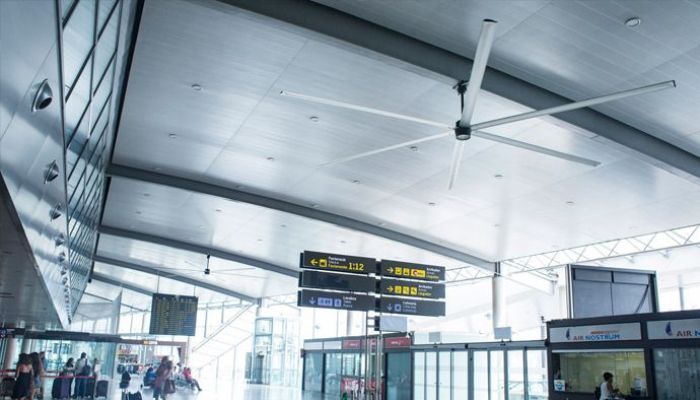
The main objective pursued by companies that have facilities with high ceilings is to provide maximum comfort and well-being throughout the year.
Maintaining the right temperature is not only important to ensure the comfort of employees and customers, but also to protect the equipment. Therefore, in this article we will talk about how the reverse mode of HVLS fans together with the radiant heating system become an integral solution for a good energy consumption in winter.
How does the radiant heating system work?
The radiant heating system, unlike conventional systems, generates heat that is transmitted directly to people, objects and surfaces, guaranteeing a more uniform and natural heat.
Efficiency is enhanced by combining this system with HVLS fans in reverse mode, as the fans distribute the heat upward in high areas, pushing it downward to reach different areas. In this way, it is possible to avoid energy waste and obtain different comfort and cost reduction benefits.
Reverse mode of HVLS fans in the radiant heating system
The radiant heating system offers greater efficiency and comfort in maintaining the temperature in this type of space. The strategic use of HVLS (High Volume Low Speed) fans plays a crucial role in this, as it can further optimize their performance, reducing costs and improving heat distribution.
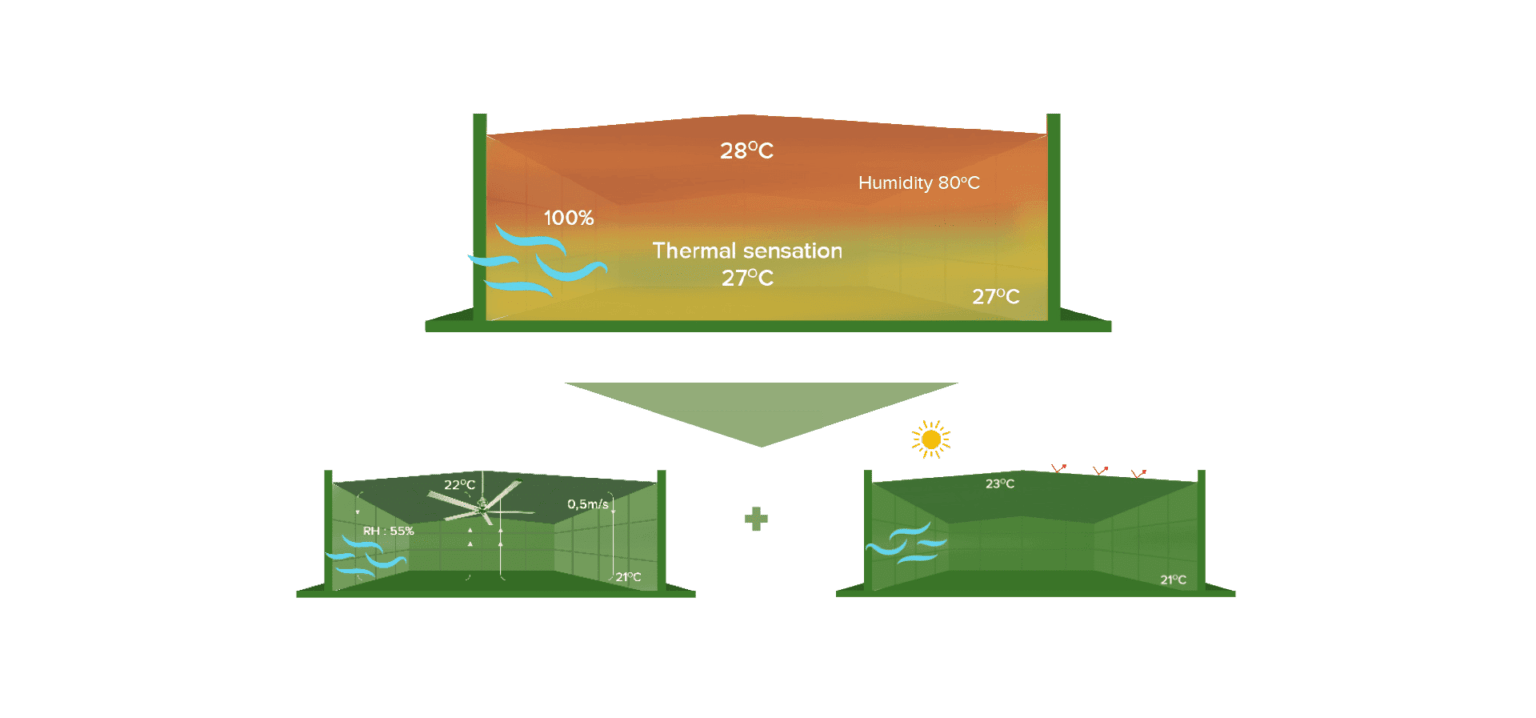
Radiant heating system and summer ventilation
During the hottest months, Magnovent recommends using fans with HVLS technology in ‘ventilation’ mode. Combined with the conventional air conditioning system (HVAC), these fans renew and purify the air, keeping it clean of dust and harmful particles, thus ensuring a healthy environment.
Use of radiant heating system in winter
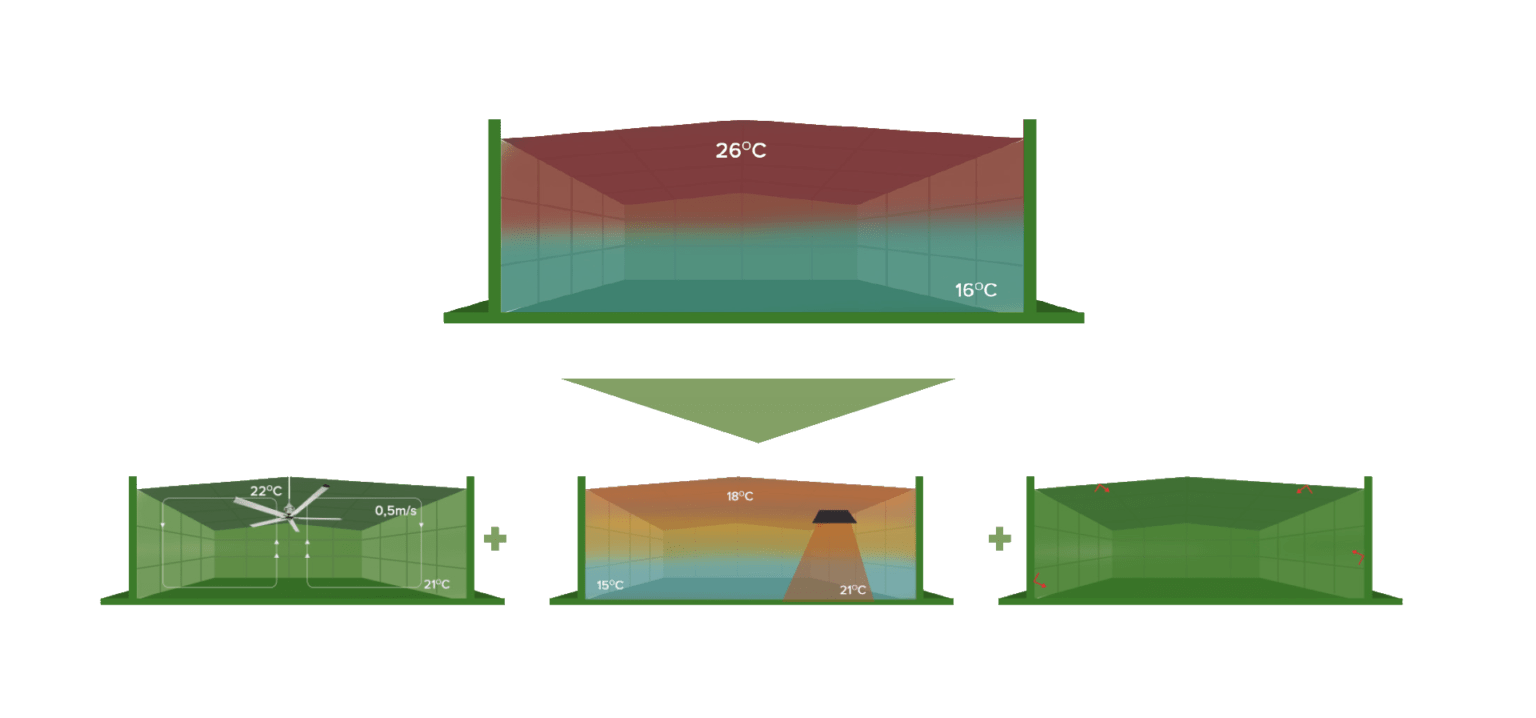
When it comes to cold, the combination of HVLS fans with a radiant heating system (based on radiators that harness infrared heat and gas) is the perfect duo. This is where the ‘reverse’ mode of HVLS fans comes into play.
The heat generated by the heating systems rises, creating temperature differences between the high and low areas of the space. By using reverse mode, the fans destratify the heat, evenly distributing the warm air. This means that the heating system does not have to work as hard, operating more efficiently.
Benefits of reverse mode with a radiant heating system
Using HVLS fans in reverse mode together with radiant heating brings different benefits with respect to comfort and energy efficiency:
- Energy savings: The destratification of heat reduces the effort of the radiant heating system, achieving significant savings in heating, and reducing energy costs by up to 40%.
- Greater thermal comfort: Thanks to the constant and homogeneous temperature, cold and hot zones are avoided within the same space, thus ensuring a more comfortable experience for employees and customers.
- Long service life: The combination of HVLS fans with another radiant heating system extends the service life of both systems, reduces wear and tear and provides smooth operation without interruptions.
Why should destratification be considered in a radiant heating system?
Air destratification is very important in installations with high ceilings, where hot air tends to accumulate in the upper part of the space. The HVLS fans with reverse mode together with the radiant heating system, allow to distribute the temperature so that it is maintained uniformly.
