


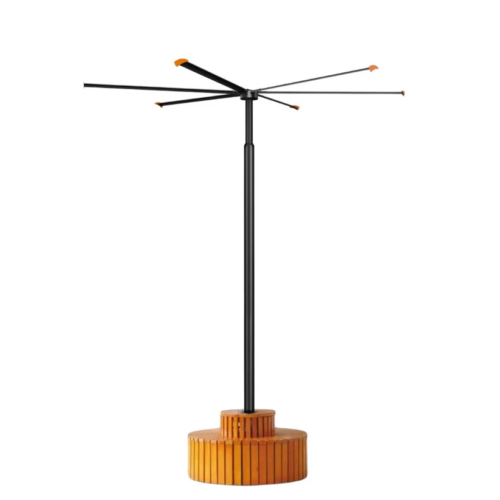
HVLS INDUSTRIAL FANS
HVLS INDUSTRIAL FANS FOR BIG INDUSTRIAL WAREHOUSES AND BUILDINGS WITH HIGH CEILINGS
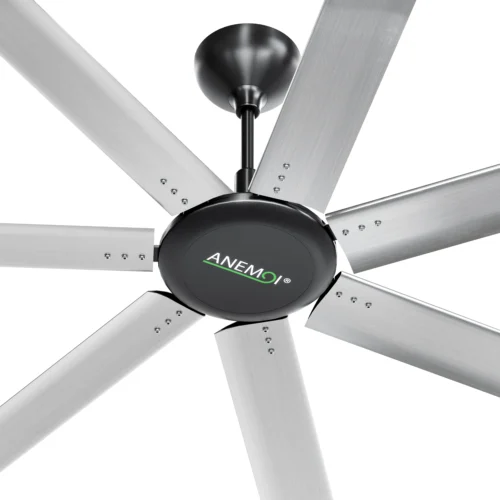
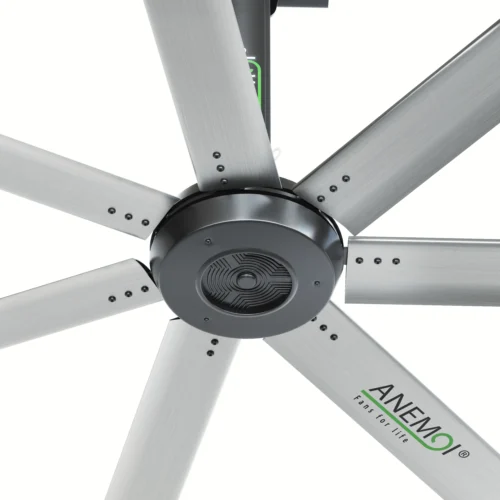
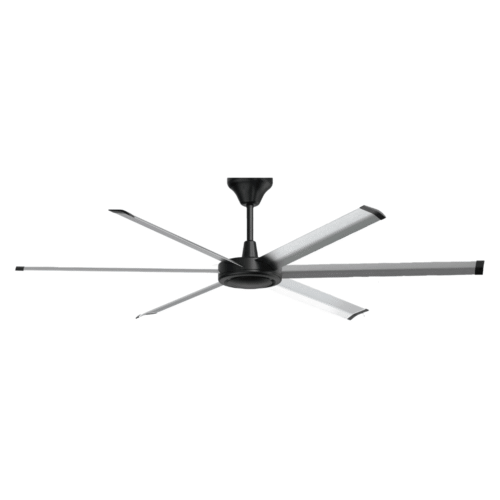
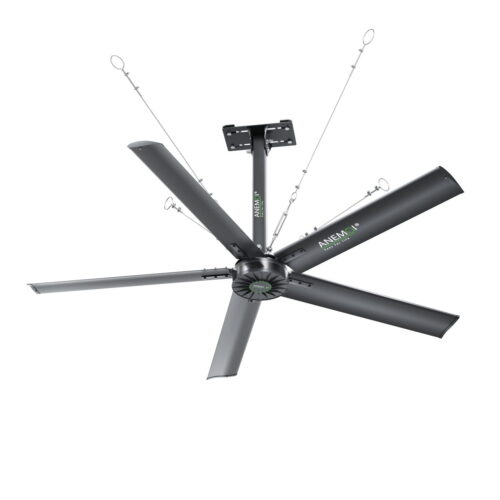
HVLS industrial fans from Magnovent are thought to be installed in big warehouses and buildings of high ceilings. The acronym HVLS means “High-Volume Low-Speed” as they move a high volume of air at low rpm because of their big blades. This HVLS technology increases comfort reducing thermal sensation in up to 6ºC and, in combination with the existing HVAC systems, generates up to 30% annual energy savings.
Magnovent specifies several high-quality fan series across its projects. The flagship is the AIRPRO series, revamped in 2026 and engineered as one of the most powerful HVLS industrial fans technologies on the market, with a refined aesthetic to match. In addition, we offer a lifetime warranty; one of the strongest warranty commitments in the industry.
WHY CHOOSE MAGNOVENT HVLS INDUSTRIAL FANS?
At Magnovent we carry out a study of your needs in order to offer the solution that best suits your project. For ventilation solutions in summer, we work following these two mandatory rules:
- Ensure an air speed higher than 0.5m/s in the whole ventilated area.
- Select the right motor power depending on the ceiling height.
We have our own CFD simulation software to study any detail and know exactly which air speed is generated by the fans at any point.
In buildings with HVAC systems we calculate the ROI adapted to any case and make special training for our customers to ensure the most efficient operation of their HVAC system in combination with the HVLS industrial fans. ROI is lower than two years in 90% of the projects.
WHY INSTALLING HVLS INDUSTRIAL FANS?
The most important reason to install HVLS industrial fans is that they can solve any comfort, energy savings, humidity or process issue in big spaces.
In warehouses or buildings without HVAC systems, during the summer months, HVLS ceiling industrial fans create an indoor breeze that increases occupants’ comfort and also extract heat from any opened door or window. Additionally, during the winter months, these fans homogenize the inside temperature, avoiding that heat stays on the top air coats.
If we add HVAC systems in the project, by homogenizing the temperature of the space we get a total control over it. Additionally, thanks to the air movement generated by the HVLS industrial fans, climate systems can reduce significantly their workload providing energy savings of 25% in summer and 45% in winter.
In terms of airflow, traditional fans move around 10.000m3/h of air, so we need between 40 and 50 fans to reach the air volume of a single HVLS industrial fan. Furthermore, as these fans are installed very high, the air won’t arrive to the floor and will return no effect. The installation cost and noise for these traditional fans is not affordable.
WHERE CAN WE INSTALL HVLS INDUSTRIAL FANS?
HVLS ceiling industrial fans are installed mainly in high buildings and opened spaces with a large number of people. Magnovent has installed HVLS industrial fans in large warehouses, logistics centers, shopping centers, stations, airports, pavilions …
HOW CAN WE MANAGE THESE HVLS INDUSTRIAL FANS?
Our HVLS industrial fans are controlled with different touch screen providing to the user manual or automatic speed/rotation control with temperature and humidity sensors, weekly calendar, fire alarm stop and automated windows control. All Anemoi products use Modbus RS485 control, so they can be easily integrated into any existing BMS system.
- Magnocontrol 1, controller for a single fan.
- Magnocontrol 4, controller for up to four fans.
- Magnocontrol 10/25, controls up to 10 or 25 units independently, supports temperature/humidity sensors, CO2 sensors, group management, weekly calendar and automated windows control.
- Customized BMS for further needs and installations with more than 25 units.
- Magnohub, a cloud-based platform developed by Magnovent to monitor, manage, and optimize its climate control systems in a centralized and remote way. From any device, it allows scheduling, monitoring thermal variables, accessing historical data, adjusting operational parameters, and receiving real-time alerts and incident notifications.
