
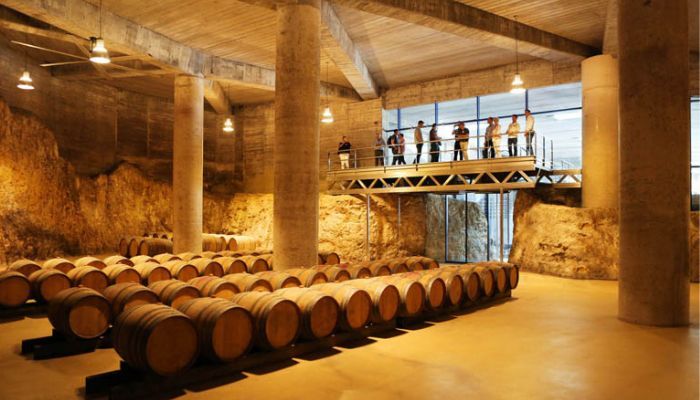
Wine production requires strict and optimal control of environmental conditions, as any variation in temperature, however minor, can affect the balance and aroma of the resulting wine. Thus, the storage temperature of wine must be constant and must not exceed 24°C for prolonged periods of time, since at this point it begins to oxidise. But how to obtain a correct wine cellar climate control?
What is the ideal temperature for a winery and how can it affect the quality of the wine?
For many companies involved in the wine industry, the main concern is what is the ideal temperature for wine storage. However, although this may depend on the type of wine, there are some general temperature standards that should be followed:
- Temperature for red wines: red wines are best stored at lower temperatures and in cool places. The ideal temperature for this type of wines is between 12º and 15 ºC. Keeping red wines at these temperatures allows them to mature slowly and prevents their ageing from being accelerated or their flavour from being altered by excessive heat.
- Temperature for white wines: white wines, especially those that require a long ageing, also need to be stored at cooler temperatures, between 10º and 13ºC. This temperature allows this type of wine to maintain its freshness and acidity, avoiding oxidation.
- Temperature for sparkling wines: for sparkling wines, such as cava or champagne, they should be stored in similar conditions to white wines. A temperature of between 7º and 10 ºC is ideal to avoid the loss of bubbles and to maintain their effervescence.
But what happens if wines are stored at a temperature above the above-mentioned parameters? Excessive heat can accelerate the ageing of the wine, alter its taste, aroma or texture. In addition, early oxidation of the wine can break down the compounds and lose its freshness. On the contrary, storing wines at lower temperatures can cause a change in taste and even generate tartrate crystals that can affect the appearance and quality of the wine, giving it a more bitter taste.
Now that you know what is the ideal temperature for each wine, what factors should you take into account to ensure a correct climate control in your winery?
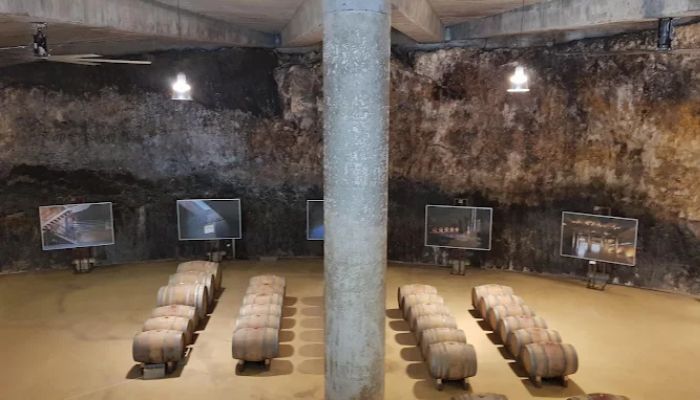
What factors influence the correct climate control in wine cellars?
There are different environmental factors that require greater control to ensure that the climate in wine cellars is correct and that wine preservation is ensured.
Excess moisture
Excessive humidity can lead to the appearance of mould and fungus, which can damage the infrastructure of the winery, the deterioration of bottle labels, equipment and the quality of the cork, as oxygen can enter and accelerate the oxidation of the wine. Conversely, a lack of humidity can be detrimental to the quality of the wine, as it can dry out the cork, allowing air to enter the wine bottle. For this reason, it is essential to maintain control of humidity and temperature. For a correct air conditioning of wine cellars, the ideal humidity should be maintained between 60 and 70%.
Lack of ventilation
Ventilation of large spaces is a key factor for many sectors, but the air conditioning of wineries requires constant air circulation to prevent heat or humidity from accumulating in the space. Poor or no ventilation can lead to CO2 build-up and affect the quality of the wine, but also the health of the winery workers.
Influence of light
A winery in direct sunlight runs the risk that UV rays can alter the taste and aroma of its wines. Therefore, wineries require soft and controlled lighting to maintain the quality of the wine and also to protect the cellar walls.
Why is it essential to maintain a correct air-conditioning system in wineries?
Air conditioning in wineries is fundamental, as a winery with a good air conditioning system can guarantee that the wine has the best conditions to complete its life cycle.However, a correct air conditioning system not only affects the quality of the wine, but also represents a long-terminvestment to increase energy efficiency and avoid product losses.
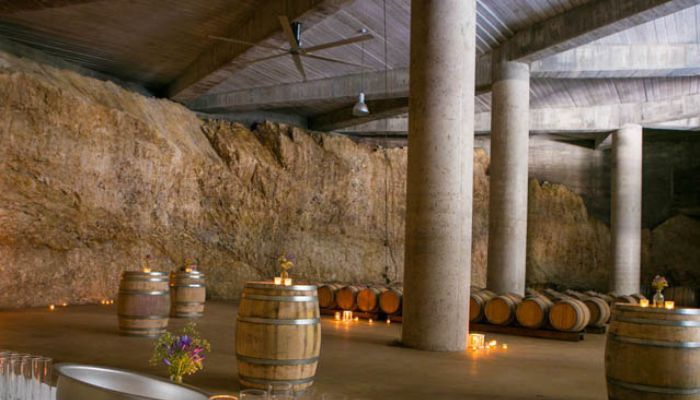
Cellar air conditioning with Magnovent’s HVLS fans
At Magnovent, as specialists in the air conditioning of large installations, we know that the most effective option for creating optimal environmental conditions in wine cellars is to install the HVLS industrial fan system, which generates a light but powerful air current capable of creating the perfect climate needed for wine production. Furthermore, compared to other conventional wine cellar air conditioning systems, this type of fan guarantees lower energy consumption and requires no maintenance whatsoever, making it a more cost-effective and efficient solution for wineries in the long term.
How do HVLS fans work to maintain proper climate control in warehouses?
Magnovent’s HVLS industrial fans clean the air in the space and distribute it evenly, preventing it from concentrating in the upper part of the cellar. At the same time, these fans offer the option of reverse mode, which allows it to function as a powerful extractor of heat, humidity and CO2, thus creating a microclimate suitable for wine production.
Thus, with the installation of this HVLS fan system, your wine cellar will benefit from the following features for efficient climate control:
- Consistently high performance
- Improving air quality
- Quick and easy installation with minimum disruption to customers.
- Energy savings in air conditioning and optimal comfort.
- Silent system, as by eliminating the gears, the noise produced by the blades disappears.
- Thanks to the wide range of colours it offers and its completely silent movement, it blends easily into the design of any installation.
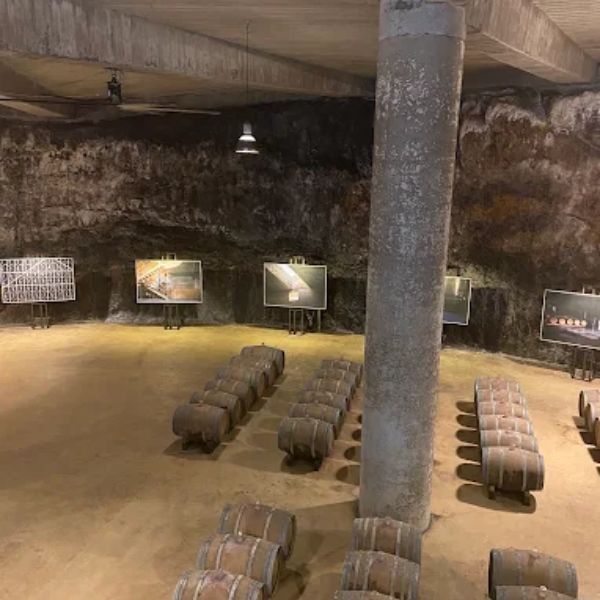
In short, HVLS industrial fans spin 50% slower than a conventional fan. However, they are able to move 560% more air without raising dust, which makes them the perfect solution to move, mix and recirculate air efficiently and obtain a correct air conditioning in warehouses.
